Don't Trade That Chariot! The Golden Rule of Xiangqi Endgames
Table of Contents
- Understanding the Apex Predator: The Xiangqi Chariot
- Why the Endgame Changes Everything
- The Golden Rule Explained: Why Trading is a Trap
- The Threat of the Draw
- The Defensive Anchor
- The Psychological Trap of Simplification
- Tactical Advantages of Keeping the Chariot
- 1. Controlling the Rib Files (Lines 4 and 6)
- 2. The "Submarine" Attack
- 3. Pinning and Immobilization
- The Exceptions: When Should You Trade?
- Conclusion: Embrace the Power of the Chariot
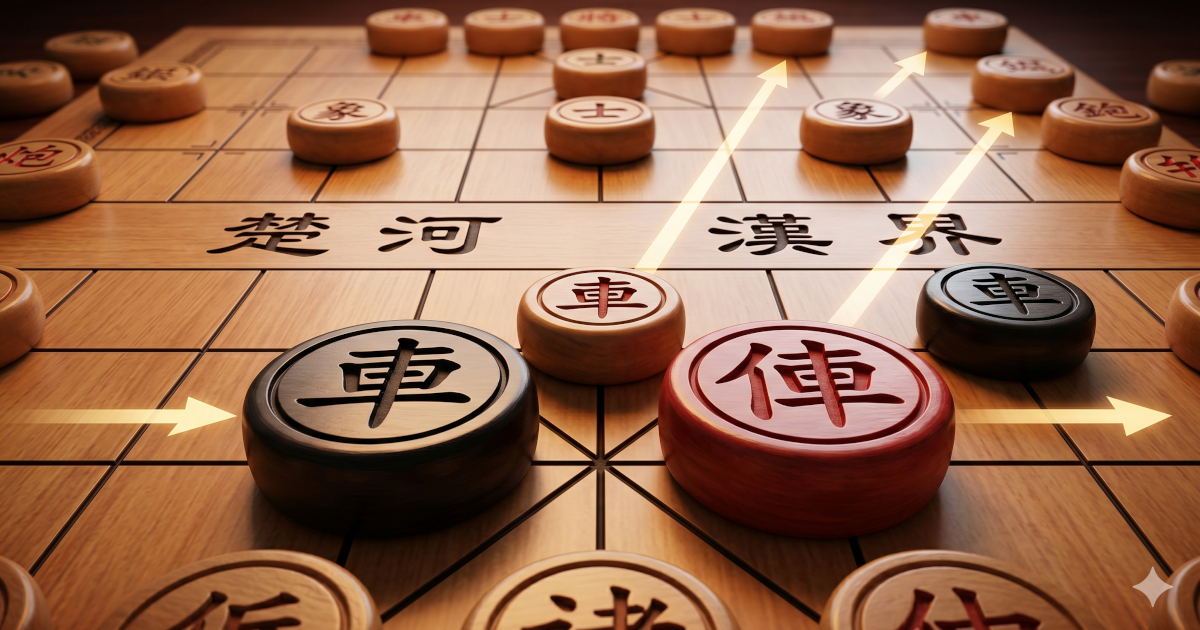
Welcome to the deep, complex, and incredibly rewarding world of Xiangqi (Chinese Chess) endgames. If you have successfully navigated the chaotic opening formations and survived the tactical bloodbaths of the middlegame, you will eventually find yourself in the endgame. The board is sparse. The pieces are few. Every single move carries the weight of the entire match. In this critical phase of the game, players often make a fatal strategic error that turns a guaranteed victory into a frustrating draw, or worse, a devastating loss. That mistake? Trading off their most valuable piece. If there is one golden rule you must internalize to improve your Xiangqi endgame strategy, it is this: Don't trade that Chariot! In this comprehensive guide, we will explore why the Chariot (Jū / 車) is the undisputed king of the Xiangqi endgame, the psychological traps that tempt players to trade it, and how you can leverage its unparalleled mobility to crush your opponents.
Understanding the Apex Predator: The Xiangqi Chariot
Before we dive into endgame principles, we must understand the nature of the piece in question. The Chariot in Xiangqi moves exactly like the Rook in Western Chess: horizontally and vertically across any number of unblocked points. However, its relative value in Xiangqi is significantly higher than the Rook in Western Chess. In traditional piece valuation:
- A Pawn (Soldier) is worth 1 to 2 points (depending on board position).
- An Advisor or Elephant is worth about 2 points.
- A Horse (Knight) or Cannon is worth roughly 4 to 4.5 points.
- The Chariot is worth a massive 9 points.
A single Chariot is generally considered equal in value to two minor pieces (e.g., a Horse and a Cannon, or two Horses). In the opening and middlegame, the board is congested. The Chariot's sweeping mobility is often restricted by friendly and enemy pieces alike. But as the board clears and the endgame approaches, the Chariot awakens.
Why the Endgame Changes Everything
To understand the "Golden Rule," you must understand how the geometry of the Xiangqi board changes as the game progresses. In the endgame, the board is wide open. The Cannons, which require a "screen" or "mount" to jump over and capture, lose a significant portion of their power because there are fewer pieces to use as jumping platforms. The Horses, which can be easily blocked ("hobbled") by adjacent pieces, suddenly find more room to maneuver, but they are incredibly slow compared to a piece that can traverse the entire board in a single turn. The Chariot, unburdened by the clutter of the early game, becomes an omnipotent force. It can attack the enemy General on the bottom rank, retreat to defend its own camp, and shift from the left flank to the right flank in a single move.
The Golden Rule Explained: Why Trading is a Trap
When you have a Chariot in the endgame, you dictate the pace of the game. So, why do so many intermediate players eagerly offer Chariot trades? Often, a player will possess a Chariot and a minor piece (like a Horse), while their opponent has a Chariot and a slightly weaker defensive structure. The first player will force a Chariot trade, thinking, "I have an extra Horse! If we trade Chariots, my Horse will easily win the game!" This is a fundamental misunderstanding of Xiangqi endgame theory.
The Threat of the Draw
Unlike Western Chess, where a King and a minor piece (like a Knight) cannot force a checkmate, Xiangqi has complex drawing rules. However, it is notoriously difficult to break down a defensive formation (Advisors and Elephants) without overwhelming force. A single Horse cannot break through a full defensive guard (two Advisors and two Elephants). Even a Horse and a high Pawn can struggle against a skilled defender with a full guard. By trading your Chariot, you voluntarily surrender your "battering ram." You might be left with a material advantage on paper, but you lose the practical ability to force a checkmate.
The Defensive Anchor
Conversely, if you are the one defending, the Chariot is your ultimate shield. A single Chariot can often hold off a massive enemy assault by perpetually pinning enemy pieces, cutting off the enemy General, or controlling the crucial center files. If you are defending against a Chariot, a Cannon, and a Pawn, trading your only Chariot for theirs will leave you helpless against their remaining minor pieces.
The Psychological Trap of Simplification
Beginners and intermediate players often suffer from a psychological condition known as "simplification bias." When the pressure of a complex board state becomes overwhelming, there is a natural human urge to simplify the equation. Trading heavy pieces instantly reduces the mental load of the game. You no longer have to calculate devastating multi-move Chariot combinations. However, in Xiangqi, simplifying the board often simplifies the game straight into a draw. To become an advanced player, you must learn to become comfortable with tension. You must keep the Chariot on the board, keep the position complex, and use your piece's superior mobility to slowly outmaneuver the opponent.
Tactical Advantages of Keeping the Chariot
When you adhere to the Golden Rule and refuse to trade, a myriad of tactical opportunities open up for you:
1. Controlling the Rib Files (Lines 4 and 6)
The "rib files" are the vertical lines immediately adjacent to the center file (where the General starts). A Chariot occupying an enemy rib file is a terrifying weapon. It restricts the enemy General's lateral movement and acts as a springboard for Cannons and Horses to deliver the final blow. Trading your Chariot abandons this supreme positional control.
2. The "Submarine" Attack
A Chariot on the opponent's bottom rank (the baseline) can wreak havoc on the Advisors and Elephants from behind. This forces the opponent into awkward, passive defensive setups, allowing your other pieces (and Pawns) to march down the board unopposed.
3. Pinning and Immobilization
Because of its linear attack path, a Chariot is the ultimate pinning piece. You can place your Chariot in a position where an enemy Horse or Cannon cannot move without exposing their General to a check. By keeping the Chariot, you effectively paralyze a portion of your opponent's army.
The Exceptions: When Should You Trade?
Every rule in strategy games has exceptions. While the Golden Rule dictates that you should generally avoid trading Chariots in the endgame, there are highly specific scenarios where a trade is not only acceptable but necessary for victory.
- The Forced Mate: This is the most obvious exception. If trading your Chariot leads directly to an unstoppable checkmate sequence with your remaining pieces, you make the trade. Tactical execution always supersedes general positional rules.
- A Mathematically Won Pawn Endgame: If you can trade Chariots to transition into an endgame where you have a guaranteed winning Pawn formation (e.g., you have a high Pawn and an Elephant, and the opponent has no defensive pieces), the trade is safe. However, you must be 100% certain of your endgame theory before pulling the trigger.
- Removing an Impregnable Defender: Sometimes, the opponent's Chariot is the only thing keeping their General alive, sitting in a perfect defensive posture. If you have an overwhelming material advantage (e.g., you have a Chariot, two Cannons, and a Horse against their Chariot and an Elephant), forcing a trade removes their only defensive anchor, allowing your minor pieces to swarm the helpless General.
Conclusion: Embrace the Power of the Chariot
Mastering Xiangqi endgames requires a deep appreciation for the unique characteristics of each piece. The Chariot is not merely a tool to be exchanged for equal value; it is the commander of the open board, the ultimate attacking weapon, and the sturdiest defensive wall. The next time you find yourself in a tense, stripped-down endgame, and your opponent offers a tempting Chariot trade, take a deep breath. Resist the urge to simplify. Remember the Golden Rule. Keep your Chariot on the board, maintain the tension, and use the unmatched mobility of your most powerful piece to drive your way to victory.
Comments (0)
You need to log in to join the discussion.
No comments yet. Be the first to share your thoughts!