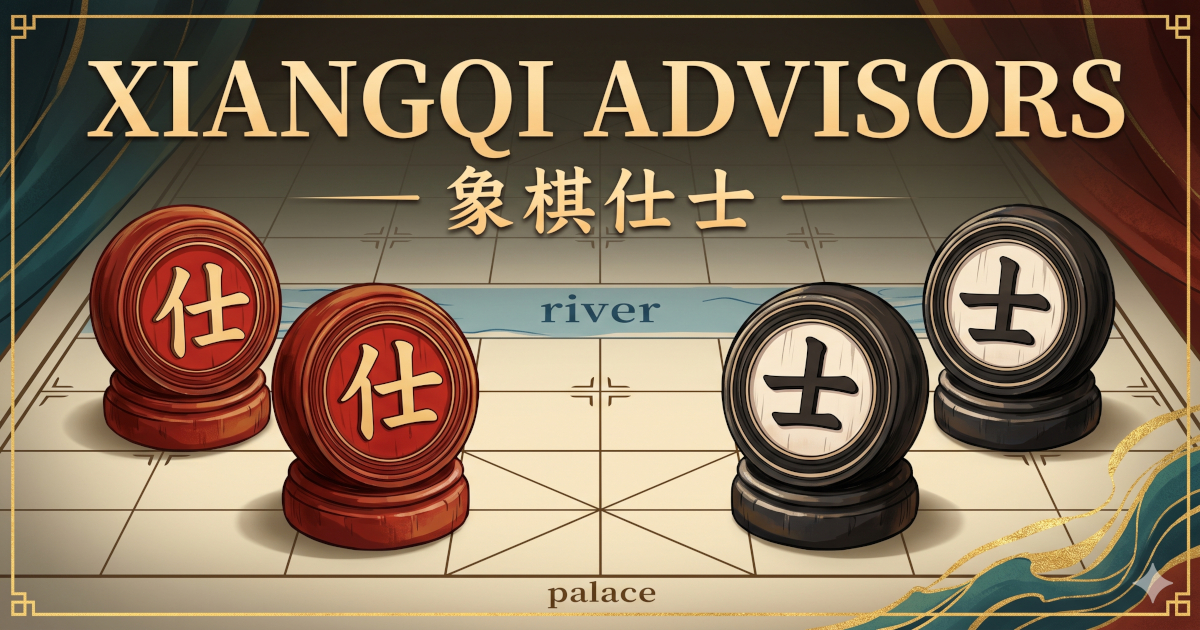
The Palace Confines: Why the Advisor Has the Worst Job on the Board
Table of Contents
- 1. The Illusion of Influence: Proximity Without Power
- 2. The Reputational Tightrope: High Risk, Low Control
- 3. The Confidant’s Dilemma: Trapped Between Founders and Investors
- The Founder's Therapist
- The Board's Spy
- 4. The Scope Creep Trap: Unlimited Expectations, Limited Economics
- 5. The Information Asymmetry Abyss
- How to Survive the Palace Confines: A Guide for Board Advisors
- Conclusion: A Role for the Resilient
The invitation usually arrives wrapped in prestige. A founder or a prominent venture capitalist reaches out, praising your industry expertise, your strategic vision, and your impeccable track record. They want you on their advisory board. To the outside world, the title of "Board Advisor" sounds like the pinnacle of professional validation. It conjures images of mahogany tables, quarterly retreats, and effortless influence over the trajectory of a rising company. But behind the closed doors of the boardroom lies a very different reality. Welcome to what seasoned corporate veterans call the "Palace Confines." It is a unique position where you are invited into the inner sanctum of power, yet explicitly stripped of the authority to wield it. While founders, executives, and formal board directors navigate their own intense pressures, the advisor occupies a strangely precarious middle ground. If you are considering accepting an advisory role, or if you are a founder wondering why your advisors seem frustrated, it is time to look at the unvarnished truth. Here is an in-depth look at why the advisor often has the absolute worst job on the board.
1. The Illusion of Influence: Proximity Without Power
The most fundamental contradiction of the advisor role is the absolute disconnect between expected insight and actual authority. As an advisor, you are brought in specifically for your judgment. You are given a seat at the table to look at the financial models, evaluate the go-to-market strategy, and assess the executive team. However, unlike a formal member of the Board of Directors, you have no vote.
- The Cassandra Complex: Advisors frequently suffer from a corporate version of the Cassandra curse—blessed with the ability to foresee the future, but cursed to never be believed. You might identify a fatal flaw in a proposed acquisition or spot a toxic culture brewing in the C-suite. You can voice your concerns, write memos, and passionately argue your case. But when the formal board members raise their hands to vote, your hand stays down.
- Bearing Witness to Bad Decisions: If the board decides to move forward with a disastrous strategy against your recommendation, you are forced to sit in the passenger seat while the car drives off a cliff. You have all the stress of knowing the crash is coming, but your foot isn't allowed anywhere near the brake pedal.
2. The Reputational Tightrope: High Risk, Low Control
In the ecosystem of startups and corporate governance, reputation is currency. When you lend your name to a company as an advisor, you are essentially transferring a portion of your hard-earned credibility to that organization.
"You are renting out your reputation to a company over whose destiny you have ultimately zero control."
When a company succeeds, the founders are hailed as visionaries, and the investors are praised for their financial acumen. The advisors might get a polite nod in a press release. However, when a company spectacularly fails, engages in unethical behavior, or becomes embroiled in a scandal, the fallout is entirely different. The media, industry peers, and future partners will look at the company's website, see your face on the "Advisory Board" page, and ask: "How could they let this happen?" Because the public rarely understands the nuanced difference between a formal Board Director (who has fiduciary duties and voting power) and a Board Advisor (who only offers suggestions), the reputational damage is often distributed equally. You bear the brunt of the association without having had the power to prevent the catastrophe.
3. The Confidant’s Dilemma: Trapped Between Founders and Investors
Advisors are frequently brought in to act as a bridge between the founding team and the institutional investors. This sounds great in theory—a neutral third party who can translate founder vision into investor metrics, and vice versa. In practice, it turns the advisor into the corporate equivalent of a shock absorber, constantly taking the impact from both sides.
The Founder's Therapist
Founders often view their advisors as safe harbors. Because you don't hold the power to fire them (unlike the lead VC on the board), founders will come to you with their deepest insecurities, co-founder conflicts, and strategic doubts. You end up absorbing a massive amount of emotional labor, acting as an unpaid executive coach and therapist.
The Board's Spy
Conversely, formal board members often view the advisor as a tool to subtly manage the CEO. VCs might ask you to "talk some sense" into a stubborn founder or backchannel information about the company's true runway. Navigating this dynamic requires masterful diplomacy. Lean too far toward the founder, and the board writes you off as a sycophant. Lean too far toward the board, and the founder cuts off your access to the truth. It is an exhausting, high-stakes political balancing act.
4. The Scope Creep Trap: Unlimited Expectations, Limited Economics
Let’s talk about compensation. A formal board director representing a VC firm is getting paid through their fund's management fees and carried interest. An independent board director is usually compensated with a combination of significant cash retainers and meaningful equity (often 1% to 2%, plus D&O insurance). The advisor, however, is often expected to operate on "startup economics." Standard advisor compensation typically ranges from 0.1% to 0.5% in equity options, vesting over a one-to-two-year period, rarely with a cash retainer.
- The Imbalance of Effort: For that fraction of a percent, the implicit expectations are incredibly high. Founders expect you to be on call for late-night crisis management, to open your coveted Rolodex for fundraising intros, to interview key executive hires, and to review pitch decks on your weekends.
- The Illiquidity Factor: That 0.1% equity only matters if the company achieves a massive liquidity event. If the company fails, or achieves a mediocre exit where preference stacks wipe out common stock, your hourly rate for all those late-night strategy sessions effectively drops to zero. You are taking on the stress of a C-level executive for the compensation of a lottery ticket.
5. The Information Asymmetry Abyss
To give good advice, you need good data. Yet, advisors are structurally positioned to receive the worst data of anyone in the executive orbit. Founders live in the data day-to-day. Formal board members demand rigorous, audited financial packages and KPI dashboards days before a board meeting. Advisors, on the other hand, often receive an ad-hoc, highly curated, and sanitized version of reality. You are expected to provide paradigm-shifting strategic advice based on a 15-minute phone call and a hastily forwarded PDF. When your advice eventually falls short because you weren't told about a pending lawsuit or a massive churn in the enterprise client base, the failure is somehow attributed to your lack of insight, rather than the company's lack of transparency.
How to Survive the Palace Confines: A Guide for Board Advisors
If you still wish to navigate the treacherous waters of board advising, it is possible to make the role rewarding. But it requires setting ironclad boundaries from day one. Here is how you survive the Palace Confines:
- Define the Scope in Writing: Never sign a vague "Advisor Agreement" pulled from a legal template site. Define exactly what is expected: How many hours per month? Are you required to attend formal board meetings? Are you expected to make introductions to your personal network?
- Demand Radical Transparency: Make it a condition of your involvement that you receive the exact same board packets and financial reports as the formal Board of Directors. You cannot navigate a ship if you are blindfolded.
- Protect Your Downside: Ensure you have an indemnification agreement. While advisors rarely face the same legal liabilities as formal directors, frivolous lawsuits happen. Make sure the company covers your legal costs if you are named in an action resulting from your advisory role.
- Know When to Walk Away: If your advice is consistently ignored, or if you catch the founding team hiding critical information, resign immediately. Your reputation is worth infinitely more than 0.25% of a mismanaged startup.
Conclusion: A Role for the Resilient
The advisor role is not inherently bad, but it is fundamentally misunderstood. It is pitched as a relaxed, prestigious victory lap for successful executives, when in reality, it is a complex, high-friction job requiring intense emotional intelligence, strict boundary management, and a high tolerance for powerlessness. By understanding the "Palace Confines," both companies and seasoned professionals can reset their expectations. When founders treat advisors as true strategic partners rather than just logos for a pitch deck, and when advisors demand the transparency they need to do their jobs, the role can finally transform from a corporate trap into a genuine engine for growth. Until then, approach the boardroom with your eyes wide open.
Comments (0)
You need to log in to join the discussion.
No comments yet. Be the first to share your thoughts!