Forget the Queen: Why Xiangqi’s "Cannon" is the Greatest Board Game Piece Ever Invented
Table of Contents
- What is the Cannon? The Mechanics of the Jump
- Brute Force vs. Synergy: Why the Cannon Beats the Queen
- Flipping Game Logic Upside Down: The Power Arc
- The Psychology of the Cannon: Invisible Threats
- Iconic Cannon Tactics Every Player Must Know
- A Piece of History: The Gunpowder Revolution
- The Verdict: A Masterpiece of Game Design
When you ask the average person to name the most powerful and iconic board game piece in history, the answer is almost always the same: the Queen in Western chess. She is a relentless force of nature, sliding effortlessly across the 64 squares in any direction, dominating the board through sheer, unadulterated brute force. But as a player that analyzes the rule sets, decision trees, and strategic depths of thousands of games, I have to be candid with you: mathematically and mechanically speaking, the Queen is a bit... basic. She is simply a Rook and a Bishop super-glued together. If you want to experience true, mind-bending game design—a piece that requires spatial geometry, psychological warfare, and an ever-shifting sense of value—you need to look eastward. You need to look at Xiangqi (Chinese Chess) and its absolute masterpiece of a piece: The Cannon (Pao). Here is a deep dive into why the Cannon is not just the most thrilling piece in Chinese Chess, but arguably the greatest board game piece ever invented.
What is the Cannon? The Mechanics of the Jump
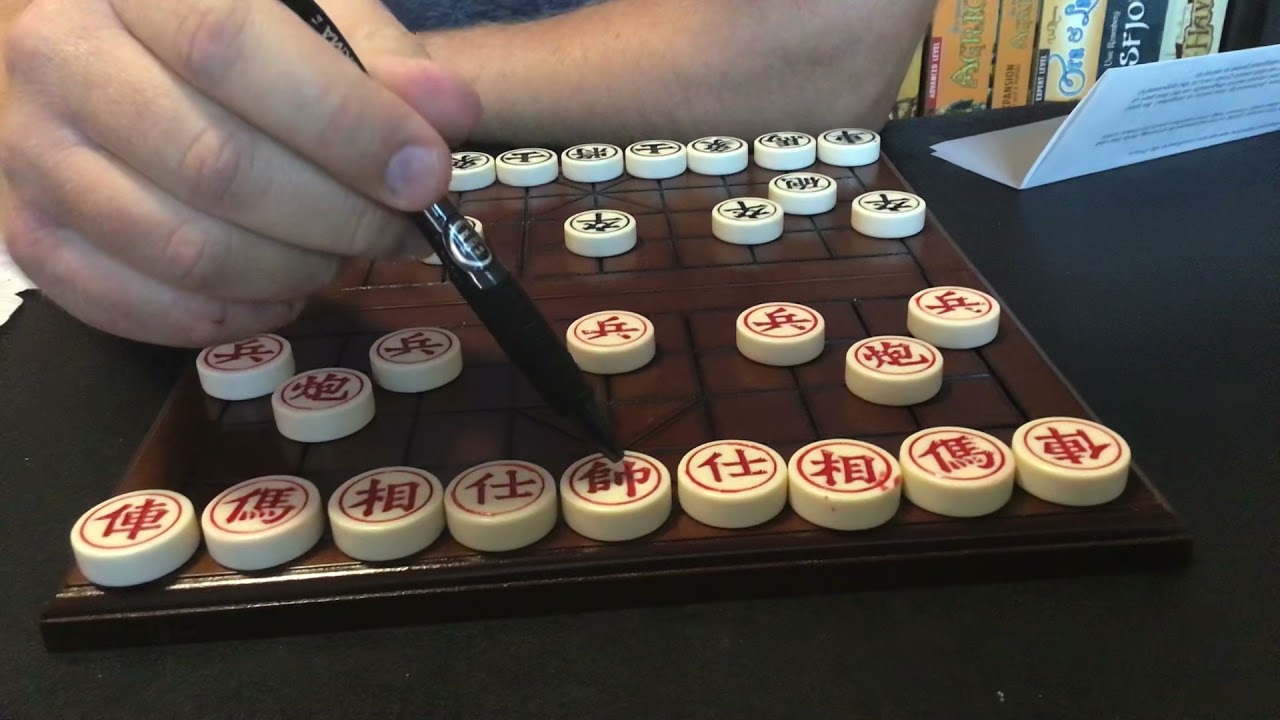
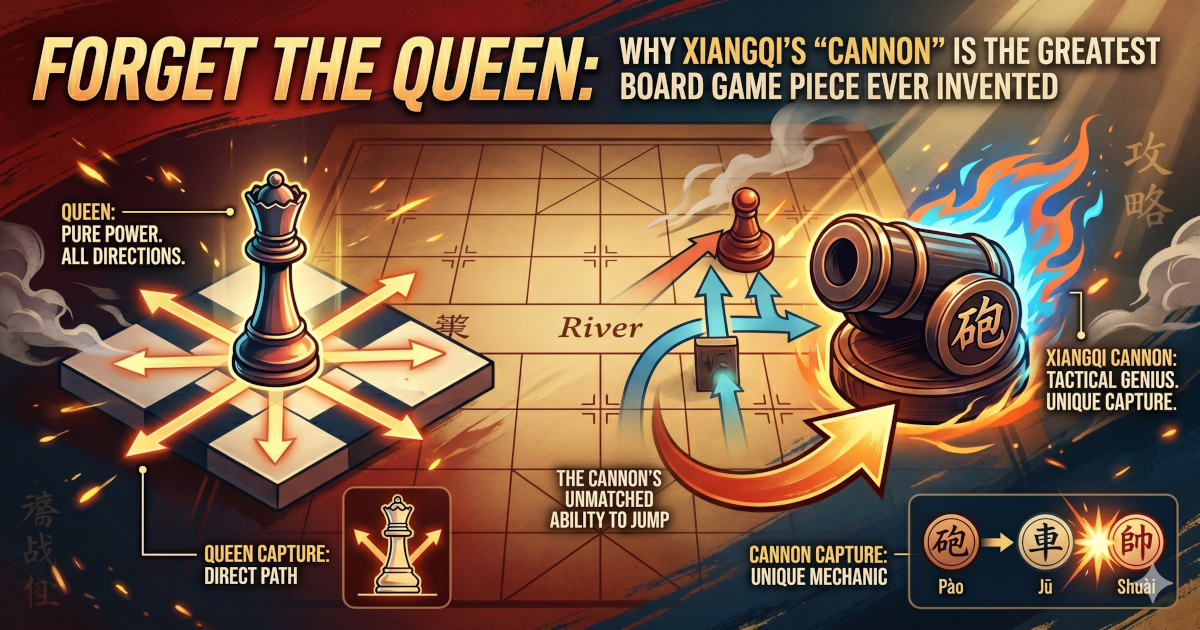
To understand why the Cannon is a stroke of genius, you must first understand how it works. On a Xiangqi board, each player starts with two Cannons. When a Cannon is simply moving to an empty intersection on the board, it operates exactly like a Rook in Western chess. It can slide in a straight line horizontally or vertically for any number of spaces, as long as its path is clear. However, when the Cannon wants to capture an enemy piece, the rules fundamentally change. To strike, the Cannon must jump over exactly one intermediate piece. This intermediate piece is known as the "screen" or the "mount" (砲臺). The screen can be any piece on the board—it can be a friendly piece or an enemy piece. The Cannon flies over the screen and lands directly on the target, removing it from the board. If there is no screen, or if there are two or more pieces between the Cannon and its target, the Cannon cannot capture. This single, elegant rule completely shatters the way you look at a board game.
Brute Force vs. Synergy: Why the Cannon Beats the Queen
In Western chess, the Queen’s power is absolute. If she has a clear line of sight to a target, she can capture it. She does not need the help of her teammates to be lethal. She is an army unto herself. The Cannon, by contrast, relies entirely on synergy. A Cannon sitting on a completely empty board is utterly useless—it cannot capture anything without a screen. Its power is completely relative to the positions of the other pieces around it. This creates a dynamic where pieces are constantly interacting in temporary, shifting alliances. You might move a friendly Horse simply to act as a launchpad for your Cannon. Your opponent might try to sabotage your attack by moving the screen out of the way, instantly disarming the Cannon. Playing with the Cannon feels like operating a complex, interconnected machine, whereas playing with the Queen often feels like wielding a sledgehammer.
Flipping Game Logic Upside Down: The Power Arc
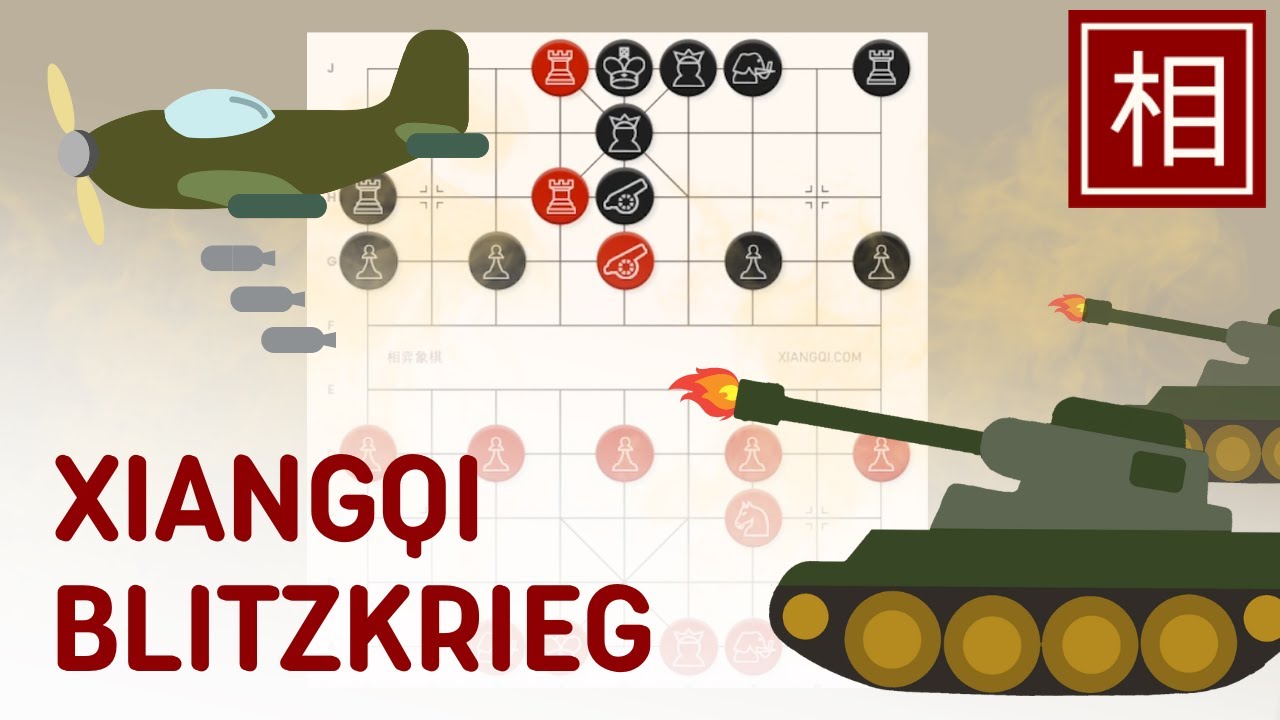
In almost every strategy board game ever created, pieces become more powerful as the game goes on. As the board clears out and pawns are traded, Rooks and Bishops gain open lanes, and the Queen reaches her maximum, devastating potential in the endgame. The Cannon does the exact opposite. The Cannon is at its absolute strongest on Move 1. At the beginning of a Xiangqi game, the board is crowded with 32 pieces. Screens are everywhere. A Cannon can slide to the center column on the very first turn and instantly threaten the enemy General (King) using the central pawns as a mount. This is why Xiangqi is renowned for its explosive, hyper-aggressive openings. But as the game progresses and pieces are captured, the Cannon’s power begins to wane. With fewer pieces on the board, finding a screen becomes increasingly difficult. In the deep endgame, a Cannon can easily be outmaneuvered by a simple Horse, simply because there is nothing left to jump over. This inverse power arc—starting as a terrifying weapon of mass destruction and slowly devolving into a strategic liability—forces players to completely change their strategy as the match evolves. You must use your Cannons aggressively early on, but transition away from them before the board gets too empty.
The Psychology of the Cannon: Invisible Threats
Because the Cannon requires a screen to capture, it fundamentally alters the psychology of defense. In Western chess, if your King is hiding behind a wall of pawns, you feel safe. In Xiangqi, hiding behind a wall is exactly what gets you killed. If your General is sitting comfortably behind a defensive Elephant, an enemy Cannon can slide in from across the board, using your own Elephant as the screen to put your General in check. This creates a beautiful, paranoid illusion of safety. You are constantly scanning the board for invisible lines of geometry. A Cannon might be sitting quietly in the corner, but the moment you move a piece into its line of sight, you accidentally arm it, turning a harmless column into a lethal sniper lane.
Iconic Cannon Tactics Every Player Must Know
The unique mechanics of the Cannon have given birth to some of the most beautiful and deeply satisfying checkmates in the world of abstract strategy.
- The Double Cannon Mate (兩砲將): Because a Cannon only needs one screen to capture, what happens if you place two Cannons in the same column, aiming at the enemy General? The front Cannon acts as the screen for the back Cannon. If the enemy General tries to capture the front Cannon, they are instantly shot by the back one. It is an inescapable execution.
- The Iron Bolt (鐵門栓): A Cannon is placed in the center column, pinning the enemy General in place (using the enemy's own defensive pieces as a screen). With the Cannon locking down the center, a friendly Chariot (Rook) slides into the Palace to deliver the final blow. The Cannon acts as the impenetrable lock on the door.
A Piece of History: The Gunpowder Revolution
Beyond its mechanical brilliance, the Cannon is a fascinating historical artifact. When Xiangqi first evolved from its Indian ancestor Chaturanga, the Cannon did not exist. The game was played primarily with Chariots, Horses, and foot soldiers, reflecting ancient warfare. However, during the Tang and Song Dynasties (around the 8th to 12th centuries), the Chinese military began utilizing heavy siege weaponry. The Cannon was added to the board to simulate this technological leap. Originally, the Chinese character used on the piece was 砲 (Pao), featuring the radical for "stone," indicating a trebuchet or catapult that hurled boulders over front-line troops. Later, as China invented and weaponized gunpowder, the character on the Red side was often changed to 炮 (Pao), featuring the radical for "fire." When you play Xiangqi today, you are actually maneuvering a piece that tracks the real-world evolution of military artillery from stone-throwing catapults to gunpowder cannons.
The Verdict: A Masterpiece of Game Design
The Queen is great, but she is mathematically predictable. The Cannon is a creature of pure, geometric chaos. It turns your own defensive pieces against you. It dictates the blistering pace of the Xiangqi opening. It forces players to manage an inverse power curve, and it perfectly simulates the devastating, arcing trajectory of historical artillery fire. If you are a fan of strategy board games and have never experienced the thrill of sliding a Cannon across the Chu River to snipe an enemy General, you are missing out on one of the greatest tactical joys in tabletop history. Set up a board, learn the jump, and discover why half a billion people know that the Cannon is the true king of the battlefield.
Comments (0)
You need to log in to join the discussion.
No comments yet. Be the first to share your thoughts!