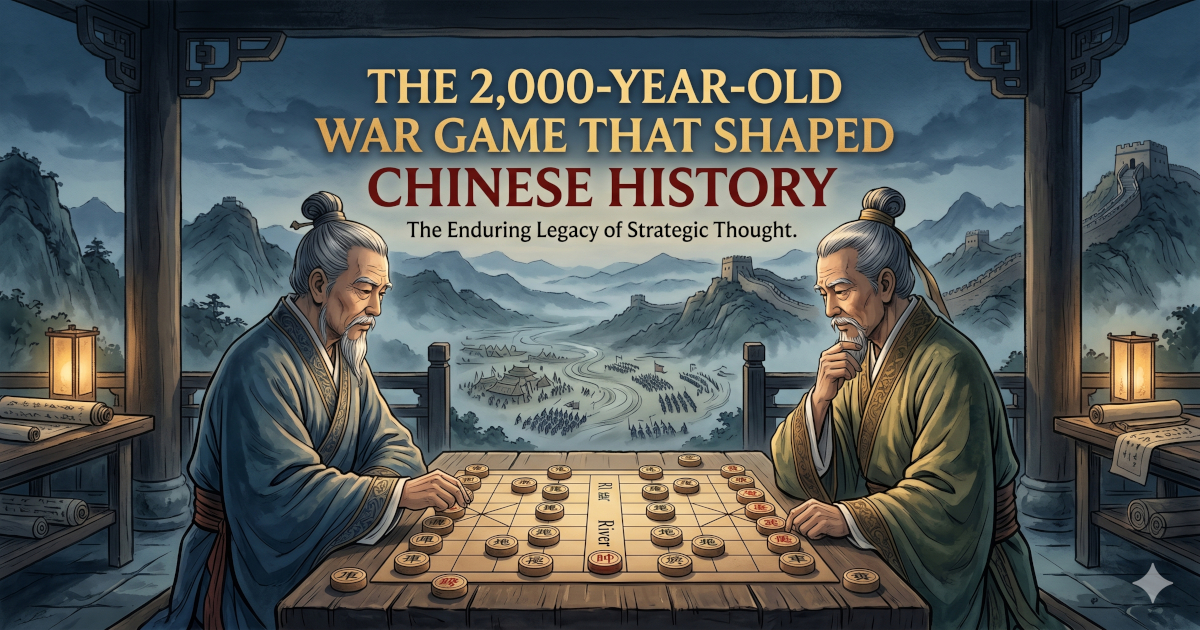
The 2,000-Year-Old War Game That Shaped Chinese History
Table of Contents
- The Origins: A Civil War Carved in Wood
- How the Board Mirrors Ancient Military Doctrine
- 1. The Importance of Geography: The River
- 2. The Bunker System: The Nine-Point Palace
- 3. The Artillery: The Introduction of the Cannon
- A Pedagogical Tool for Warlords and Scholars
- From the Emperor’s Court to the Streets
- The Legacy of the Greatest War Game
When we think of ancient artifacts that shaped empires, we usually picture forged iron swords, bronze cannons, or crumbling stone walls. We rarely picture small, wooden discs carved with characters, slid across a grid by old men drinking tea in a public park. Yet, for over two millennia, one board game has served as a masterclass in military strategy, a philosophical tool for emperors, and a reflection of China's most foundational civil war. That game is Xiangqi, widely known across the globe as Chinese Chess. Boasting hundreds of millions of active players today, Xiangqi is far more than a casual pastime. It is a playable history lesson. To sit at a Xiangqi board is to step back in time 2,000 years, taking command of ancient armies in a conflict that permanently altered the trajectory of Asian history. If you want to understand how a simple board game helped shape the cultural and military mind of an empire, you have to look at the blood-soaked history hidden within its rules.
The Origins: A Civil War Carved in Wood
To understand Xiangqi, you must first understand the Chu-Han Contention (206–202 BC). Following the collapse of the tyrannical Qin Dynasty (famous for beginning the Great Wall and the Terracotta Army), a massive power vacuum opened in China. Two dominant warlords emerged to fight for control of the fractured empire:
- Xiang Yu, the Hegemon-King of Western Chu: A legendary, physically towering warrior known for his battlefield ferocity and ruthless tactics.
- Liu Bang, the King of Han: A cunning, charismatic leader of peasant origin who relied on brilliant advisors, diplomacy, and strategic patience.
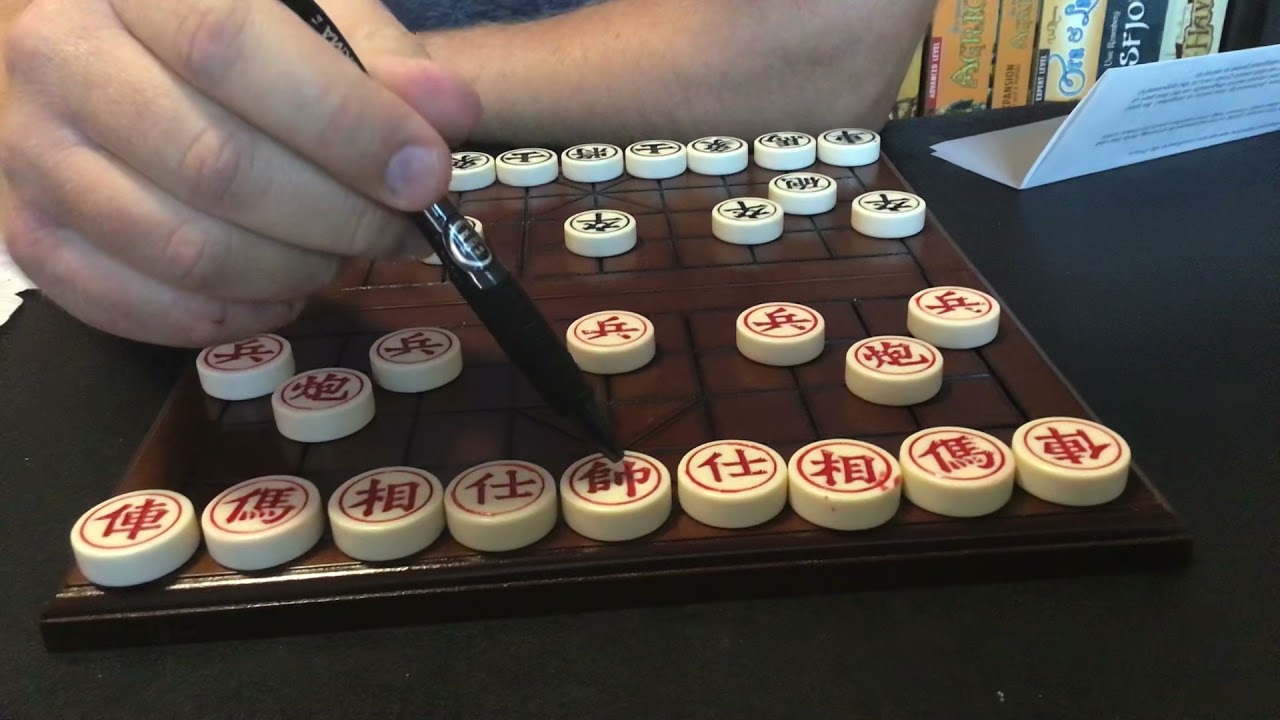
For five brutal years, their armies clashed in a war that would determine the fate of millions. Liu Bang ultimately emerged victorious, establishing the Han Dynasty, a golden age that lasted over 400 years and cemented the cultural identity of the Chinese people (to this day, the majority ethnic group in China refers to themselves as the Han Chinese). Xiangqi is a direct, deliberate simulation of this specific war. If you look at the center of a traditional Xiangqi board, you will see a blank horizontal space dividing the two sides. Painted inside this space are the characters 楚河漢界 (Chu He Han Jie), which translates literally to the "Chu River and Han Border." When you play Chinese Chess, you are not playing an abstract fantasy game. You are either Xiang Yu or Liu Bang, battling for the mandate of heaven.
How the Board Mirrors Ancient Military Doctrine
The genius of Xiangqi lies in how perfectly its mechanics translate ancient Chinese military doctrine—specifically the teachings of Sun Tzu’s The Art of War—onto a 9x10 grid. Unlike Western chess, which evolved to reflect a medieval European feudal system, Xiangqi is an uncompromising simulation of Eastern warfare.
1. The Importance of Geography: The River
In Western chess, the board is a uniform 64-square grid. In Xiangqi, the terrain dictates the strategy. The Chu River physically divides the board, and this geographical barrier changes how pieces function.
- Pawns (Soldiers) can only march straight forward until they cross the river, at which point they gain the ability to move sideways, simulating the tactical freedom of penetrating enemy lines.
- Elephants, the heavy defensive units, are strictly forbidden from crossing the river. They are too slow and cumbersome to launch an amphibious assault, so they must remain in the homeland to build defensive formations.
2. The Bunker System: The Nine-Point Palace
At the back of each side of the board sits a 3x3 square marked with diagonal intersecting lines. This is the Palace. The General (the equivalent of the King) and his two Advisors can never leave this zone. In European chess, the King often marches up the board in the endgame to fight alongside his troops. In ancient China, a supreme commander charging into the frontline was considered reckless and foolish. The General remains protected in his command tent, directing the flow of battle from a secure bunker while his Advisors physically shield him from assassins.
3. The Artillery: The Introduction of the Cannon
While the core of Xiangqi dates back over 2,000 years, the game evolved as Chinese military technology evolved. The most thrilling piece on the board is the Cannon (Pao). Added during the Tang or Song dynasty to reflect the invention of gunpowder and siege weaponry, the Cannon moves like a Chariot (Rook) but can only capture an enemy by jumping over exactly one intermediate piece. This jumping mechanic perfectly simulates the parabolic arc of artillery fire, allowing players to launch devastating, long-range strikes over the heads of front-line infantry.
A Pedagogical Tool for Warlords and Scholars
Because Xiangqi so accurately simulated the realities of logistics, geography, and tactical deception, it quickly became a pedagogical tool. For centuries, military officers, scholars, and young nobles were encouraged to study the game. It taught vital lessons that went beyond just killing the enemy:
- The Illusion of Strength: The Cannon teaches players that an enemy piece that looks perfectly safe behind a wall of defenders is actually in the most danger, as those defenders act as the perfect "mount" for an artillery strike.
- Strategic Flexibility: The Horse (Cavalry) in Xiangqi moves similarly to a Knight in Western chess, but it cannot jump over adjacent pieces. If a pawn steps directly in front of the Horse, its leg is "hobbled," and it cannot move. This teaches commanders that even the fastest cavalry is useless if the terrain or enemy infantry bogs them down.
- Patience and Restraint: Unlike Western chess where games frequently end in a draw (stalemate), in Xiangqi, a player who has no legal moves left loses the game immediately. You are rewarded for completely suffocating your opponent’s supply lines and options, a direct nod to Sun Tzu’s philosophy of winning the war before a single battle is fought.
From the Emperor’s Court to the Streets
What truly makes Xiangqi an artifact of historical significance is its classless nature. While the game was studied by emperors in the Forbidden City and praised by famous poets like Bai Juyi and Su Shi, it was equally beloved by the common people. The pieces are simple flat discs with characters painted on them. They were incredibly cheap to manufacture, meaning anyone—from a wealthy merchant to a humble farmer—could afford a set. As a result, Xiangqi permeated every layer of Chinese society. It became the great equalizer. On the Xiangqi board, a street vendor could outsmart a government official. Today, this legacy lives on. Walk through any major city in China, Vietnam, or a global Chinatown, and you will see crowds gathered around public stone tables, slamming wooden pieces down with ferocious speed, debating tactics, and sharing stories.
The Legacy of the Greatest War Game
It is rare for any piece of human culture to survive 2,000 years largely intact. It is even rarer for it to remain a central pillar of daily life for half a billion people. Xiangqi is not just a game; it is a living museum. It is a testament to the strategic brilliance of ancient Chinese commanders and the enduring legacy of the Chu-Han Contention. It teaches us that true power lies not just in brute force, but in the mastery of terrain, the clever use of deception, and the impenetrable defense of the homeland. Whether you are a historian looking to understand the mind of Liu Bang, a chess player looking for a faster, more aggressive challenge, or simply someone who appreciates elegant strategy, Xiangqi offers a window into the past. Set up the board, look across the Chu River, and take your place in history.
Comments (0)
You need to log in to join the discussion.
No comments yet. Be the first to share your thoughts!