The "Double Cannon" Checkmate: A Step-by-Step Guide to Xiangqi's Deadliest Trap.
Table of Contents
- Understanding the Foundation: The Xiangqi Cannon (Pao / 炮)
- Anatomy of the Double Cannon Checkmate
- Why is it Unstoppable? The "Catch-22" of Xiangqi
- A Step-by-Step Guide to Executing the Trap
- Step 1: Constrict the General's Mobility
- Step 2: Plant the Anchor (The Front Cannon)
- Step 3: Align the Executioner (The Rear Cannon)
- Step 4: Seal the Exits and Fire
- Common Variations of the Double Cannon
- How to Defend Against the Deadliest Trap
- Conclusion
If you have ever sat down for a game of Xiangqi (Chinese Chess) and suddenly found your General helplessly trapped by two pieces firing from across the board, you are not alone. It is a rite of passage for every beginner to fall victim to this elegant, brutal, and seemingly inescapable tactic. Welcome to the Double Cannon Checkmate—known in Chinese as Chong Pao Sha (重炮杀) or the "Heavy Cannon" strike. Unlike Western chess, where checkmates often involve a slow, suffocating constriction of the King, Xiangqi is a game of rapid deployment, sharp tactics, and sudden death. The Double Cannon is the quintessential example of this philosophy. It is one of the most fundamental, devastating, and must-know mating patterns in all of Xiangqi strategy. In this comprehensive guide, we will break down the mechanics of the Cannon, why this specific trap is so notoriously difficult to defend against, and how you can execute it step-by-step to crush your opponents.
Understanding the Foundation: The Xiangqi Cannon (Pao / 炮)
To understand the trap, you first have to understand the weapon. The Cannon (Pao) is arguably the most unique and dynamic piece on the Xiangqi board.
- How it Moves: The Cannon moves exactly like a Rook (Chariot) in Western chess—in straight lines, vertically or horizontally, across any number of unoccupied spaces.
- How it Captures (The "Screen"): This is where the magic happens. To capture an enemy piece or to deliver a check to the enemy General, the Cannon must leap over exactly one piece. This intervening piece is called the "screen" or the "mount." It does not matter if the screen belongs to you or your opponent; as long as there is exactly one piece between the Cannon and its target, the Cannon can strike.
Because of this unique mechanic, Cannons are incredibly powerful in the opening and middlegame when the board is crowded with potential screens. The Double Cannon Checkmate maximizes this rule to create an unsolvable paradox for the defender.
Anatomy of the Double Cannon Checkmate
The setup for a Double Cannon checkmate is deceptively simple: Two Cannons are aligned on the same file (column) or rank (row) directly targeting the enemy General. Here is how the dynamic works:
- The Rear Cannon: This is the executioner. It is positioned behind your other Cannon and delivers the actual check to the enemy General.
- The Front Cannon: This piece sits between the rear Cannon and the enemy General. It serves as the all-important "screen" that allows the rear Cannon to attack.
- The Trapped General: For the checkmate to be successful, the enemy General must be confined. Because of pieces blocking its path (often its own Advisors or Elephants) or the physical boundaries of the Nine-Point Palace, the General has no safe squares to sidestep out of the Cannon's line of fire.
Why is it Unstoppable? The "Catch-22" of Xiangqi
In Western chess, if a piece puts your King in check from a distance, you can usually place a piece in between them to block the attack. In the Double Cannon checkmate, blocking is mathematical suicide. Imagine your opponent tries to block the rear Cannon's check by interposing an Advisor between your front Cannon and their General.
- By inserting a piece, they effectively break the line of sight for the rear Cannon.
- However, that newly placed piece instantly becomes a screen for your front Cannon.
- The front Cannon is now delivering a direct check to the General!
There is always exactly one intervening piece, meaning one of the two Cannons will always be actively checking the General. Furthermore, the General cannot simply move forward or backward along the same line to escape, because a Cannon's attack range covers the entire file. If the General cannot step sideways off the file, it is game over.
A Step-by-Step Guide to Executing the Trap
Pulling off the Double Cannon Checkmate requires board awareness, timing, and a bit of psychological pressure. Here is how you construct the trap from scratch.
Step 1: Constrict the General's Mobility
The Double Cannon only works if the enemy General cannot sidestep into a safe file. Your first priority is to pin the General down.
- Force the General to stay on a specific file (usually the central file or the "rib" files adjacent to the center).
- Use your Chariots (Rooks) or crossed Pawns to control the escape squares.
- Often, you do not even need to trap them yourself; novice players will naturally box in their own General with defensive Advisors and Elephants. Use their cramped formation against them.
Step 2: Plant the Anchor (The Front Cannon)
Once the General's sideways movement is restricted, maneuver your first Cannon into the same file or rank as the General. This Cannon does not need to be attacking anything yet. It simply needs to act as the future anchor and screen for your second Cannon. Secure this Cannon's position so it cannot be easily captured by an enemy Chariot or Horse.
Step 3: Align the Executioner (The Rear Cannon)
With your anchor in place, bring your second Cannon into the same line, positioned behind the front Cannon. This step requires careful tempo management. You want to align the Cannons in a way that the final move is a forced check.
Step 4: Seal the Exits and Fire
Execute the final move that drops the rear Cannon into place, delivering the check. At this point, the unblockable nature of the Chong Pao Sha takes over. The opponent realizes they cannot interpose a piece, they cannot move the General forward or backward, and their sideways escapes are blocked. Checkmate.
Common Variations of the Double Cannon
The beauty of this Xiangqi strategy is its versatility. The trap can be sprung from several different angles depending on the board state.
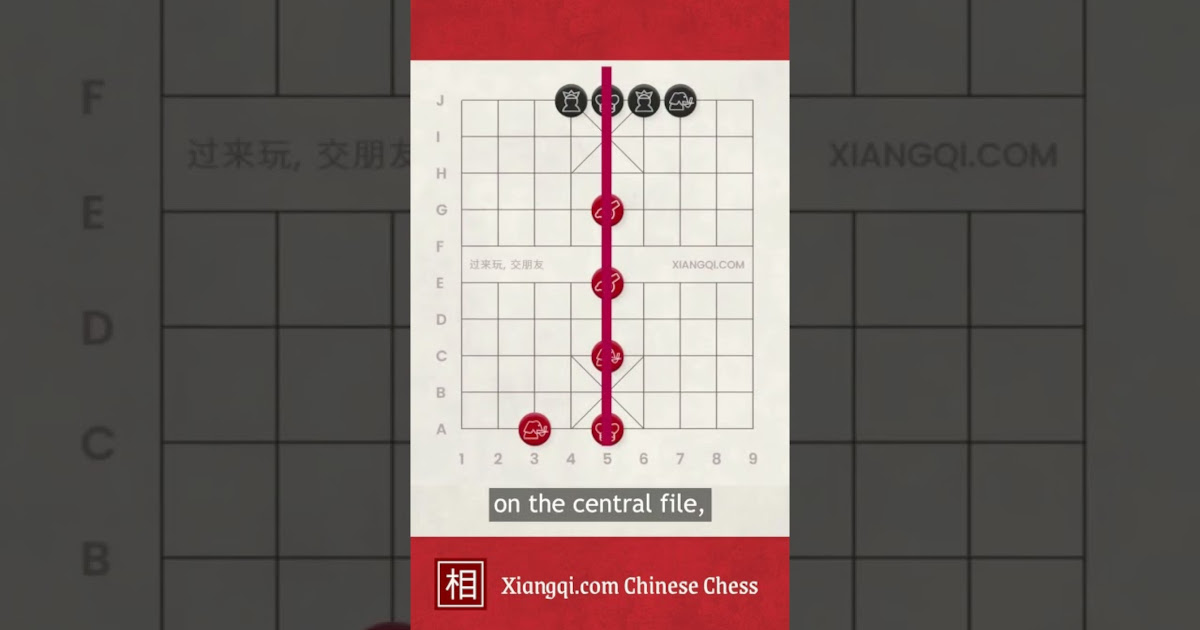
- The Central File Double Cannon: This is the most classic variation. Both Cannons line up straight down the middle of the board (File 5). This is particularly devastating in the endgame when the opponent's central defensive pieces have been cleared out, leaving the General exposed.
- The Rib File Double Cannon: The "ribs" in Xiangqi refer to Files 4 and 6 (the columns immediately left and right of the center). Because the General's Palace is only three files wide, pinning the General on a rib file often means their own Advisors are blocking their escape back to the center.
- The Bottom Rank Double Cannon: Instead of attacking vertically down a column, you align your Cannons horizontally along the opponent's bottom rank. This often catches players off guard, as they are usually busy defending vertical incursions.
How to Defend Against the Deadliest Trap
While the Double Cannon Checkmate is lethal, it is not invincible—provided you see it coming. If you want to survive the middlegame, you must play with preventative board awareness.
- Do Not Let Them Align: The simplest defense is prevention. If you see an opponent maneuvering a Cannon into the same file as your General, treat it as a high-level threat. Do not allow the second Cannon to easily slide into that same file.
- Keep Your General Mobile: The Double Cannon thrives on claustrophobia. Avoid unnecessarily crowding your General with your own Advisors and Elephants. If your General has an open file to step into, the trap immediately falls apart.
- Harass the Cannons: Use your Chariots (the fastest and most powerful pieces on the board) to disrupt the Cannons. Pin one of the Cannons, force a trade, or attack the front Cannon before the rear one can get into position.
Conclusion
Mastering the Double Cannon Checkmate is essential for anyone serious about improving their Chinese Chess game. It teaches you the unique geometry of the Xiangqi board, the dual-nature of attacking and screening, and the importance of exploiting a cramped enemy defense. The next time you play, keep an eye on your opponent's artillery. Whether you are the one setting up the trap or the one desperately trying to dodge it, the Chong Pao Sha remains one of the most thrilling and decisive tactical sequences in the world of board games. Keep your General safe, keep your lines of fire clear, and happy playing!
Comments (0)
You need to log in to join the discussion.
No comments yet. Be the first to share your thoughts!