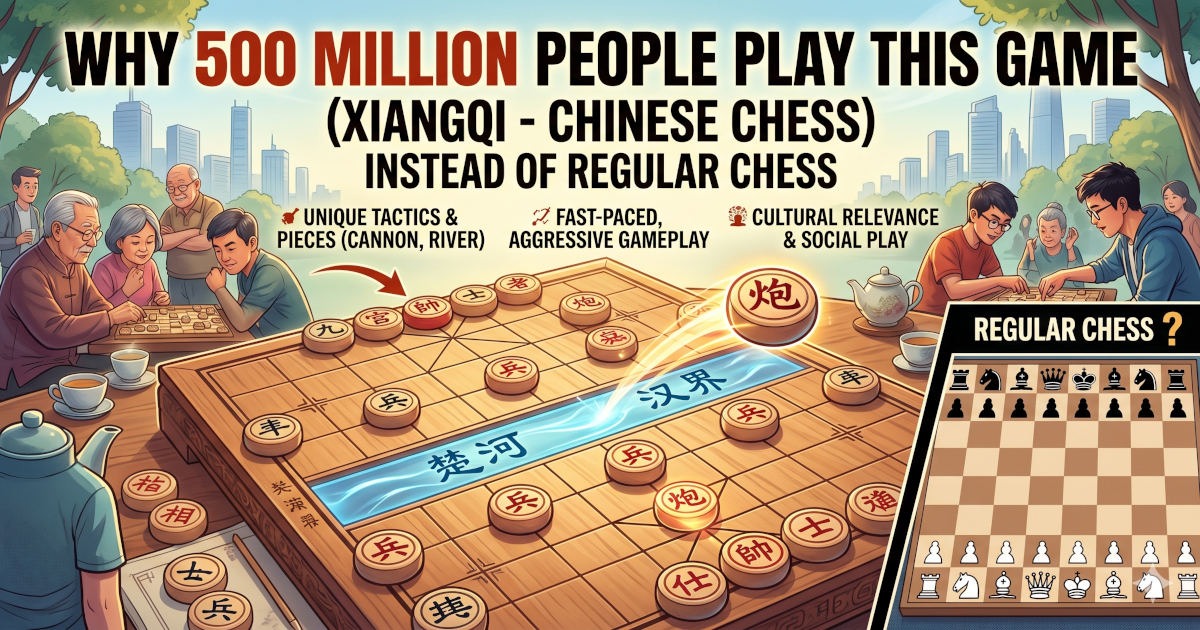
Why 500 Million People Play Xiangqi (Chinese Chess) Instead of Regular Chess
Table of Contents
When you hear the word “chess,” you likely picture the classic black and white checkered board, the iconic silhouette of the Knight, and the sweeping power of the Queen. Thanks to centuries of Western tradition, blockbuster series like The Queen’s Gambit, and the booming popularity of online chess, international (or Western) chess feels like the undisputed king of board games. But what if you were told that another game—a cousin to the chess you know—quietly boasts an estimated 500 million players worldwide? Welcome to the world of Xiangqi, widely known in the West as Chinese Chess. It is the dominant mind sport in China, Vietnam (where it is known as Cờ Tướng), and across the vast Asian diaspora. While Western chess is a game of slow, grinding positional dominance, Xiangqi is a blazing fast, highly tactical simulation of ancient warfare. If you have ever wondered why half a billion people prefer moving wooden discs featuring Chinese characters over sculpted kings and queens, you are in the right place. Let’s dive into the fascinating world of Xiangqi and explore why so many people play this ancient game instead of regular chess.
The Scale of Xiangqi: A Cultural Phenomenon
To understand why 500 million people play Xiangqi, you first have to understand its cultural footprint. In the West, chess is often viewed as a quiet, solitary pursuit played in hushed tournament halls or behind a computer screen. In Eastern Asia, Xiangqi is the heartbeat of the streets. Walk through any public park in Beijing, Guangzhou, Taipei, or Ho Chi Minh City, and you will inevitably hear the sharp clack-clack of heavy wooden pieces slapping against a board. You will see crowds of spectators huddled around two players, aggressively debating the next move, smoking cigarettes, and drinking tea. Xiangqi is deeply embedded in the social fabric. It is accessible, requires practically no money to play, and bridges generational divides. But it is not just the cultural ubiquity that keeps people playing; the mechanics of the game itself offer a drastically different—and many argue, more exciting—experience than Western chess.
A Battlefield, Not Just a Board
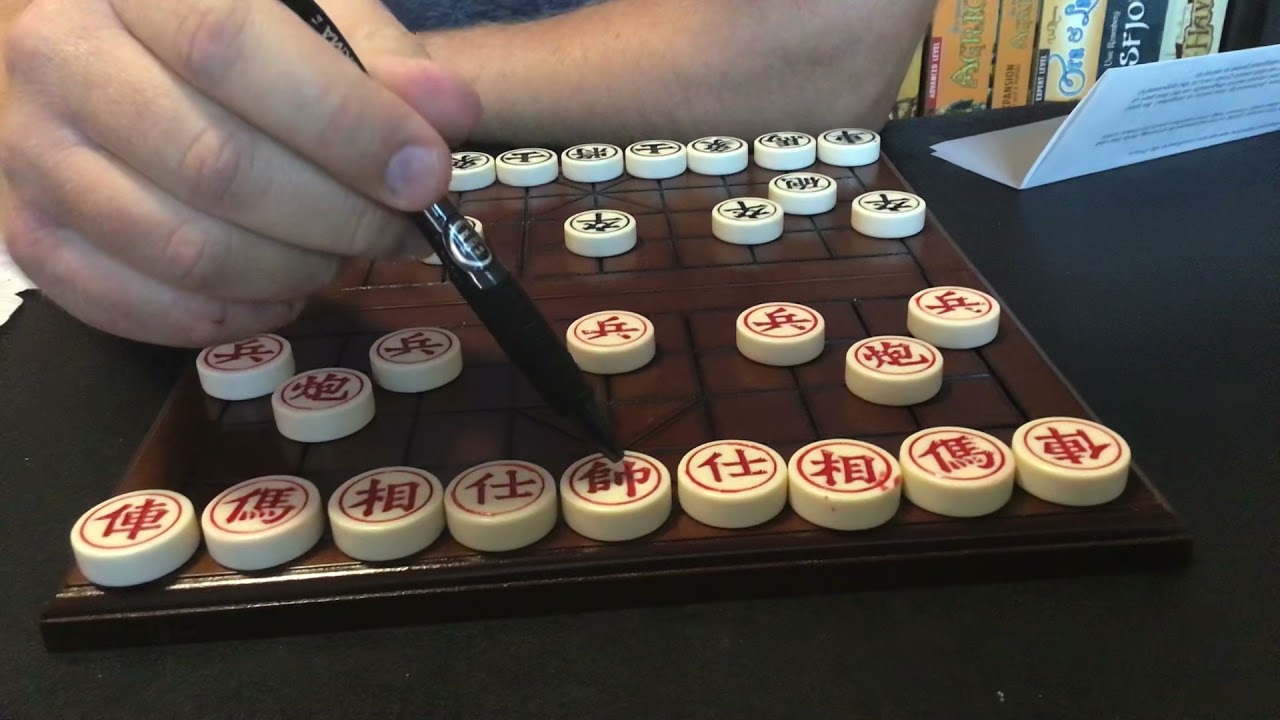
At first glance, the Xiangqi board looks entirely foreign to a Western chess player. Instead of 64 squares, the board consists of a 9x10 grid of intersecting lines. Pieces are played on the intersections, not inside the squares, much like in the game of Go. But the board is more than just a grid; it is a literal map of a battlefield, steeped in the history of the Chu-Han Contention (206–202 BC).
The River
Right in the middle of the board lies a blank horizontal space called the "River." This divides the board into two enemy territories. Certain pieces, like the heavy, defensive Elephants, are strictly forbidden from crossing the river. Pawns (Soldiers) gain the ability to move sideways only after they have bravely crossed the river into enemy territory.
The Palace
At the center of each player's back ranks is a 3x3 zone marked with diagonal lines. This is the "Palace." The General (the equivalent of the King) and his two Advisors are confined to this palace. They can never leave it, meaning the ultimate leader is always trapped in a bunker, heavily guarded but highly restricted. This thematic board layout immediately changes the psychology of the game. You aren't just playing on an abstract geometric plane; you are managing a border dispute, protecting a royal bunker, and launching cross-river invasions.
Speed and Aggression: The Power of the Cannon
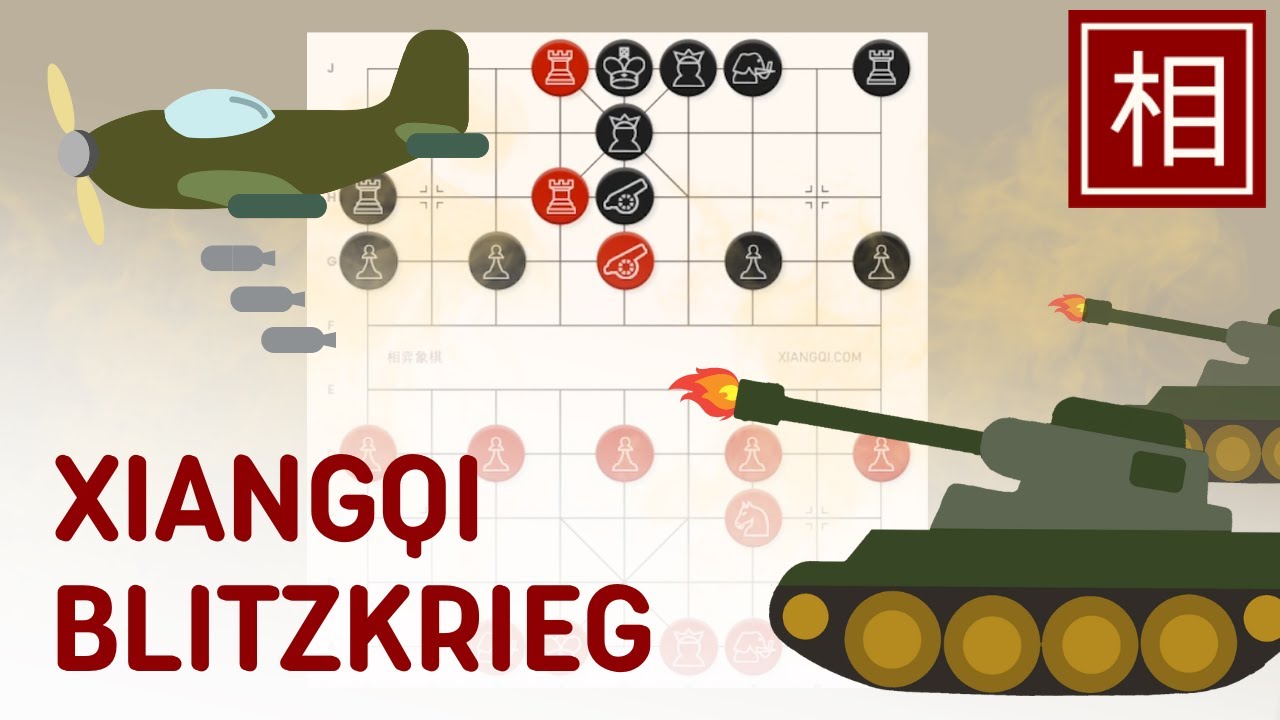
One of the biggest reasons players gravitate toward Xiangqi over Western chess is the pacing. Western chess often begins with long, methodical openings. Players build solid pawn structures and carefully maneuver pieces behind their lines before the real fighting begins. Xiangqi, by contrast, is an all-out brawl from the very first move. The primary reason for this is the lack of a dense "pawn wall" at the start, combined with the most unique and thrilling piece in the game: The Cannon (Pao). The Cannon moves exactly like a Rook (Chariot)—in straight lines horizontally or vertically for any number of spaces. However, it captures in a completely different way. To capture an enemy piece, the Cannon must jump over exactly one intermediate piece (friend or foe), known as the "screen" or "mount." Because of the Cannon, threats are immediate. On move one, a Cannon can slide to the center column and immediately threaten the enemy General. There is no quiet buildup. The board is open, the attacks are lethal, and tactics take precedence over slow, positional squeezing. For adrenaline-seeking players, Xiangqi delivers a far more explosive mid-game than regular chess.
No Place to Hide: The "Flying General" Rule
In Western chess, endgames often feature the King actively marching up the board to support its pawns. The King becomes a powerful attacking piece once the queens are traded off. In Xiangqi, the General is a vulnerable target from start to finish, permanently confined to the 3x3 Palace. But there is a fascinating twist known as the Flying General rule. The two Generals are not allowed to face each other on the same open file (column) without any pieces between them. If one player moves their piece out of the way, leaving a clear line of sight between the two Generals, it is an illegal move, akin to putting oneself in check. This means the General, despite being trapped in the Palace, exerts a bizarre "laser beam" of power down the board. A well-placed General can actually be used to pin enemy pieces or support a checkmate without ever leaving his bunker.
The Eradication of the Tedious Draw
If you ask a competitive Western chess player what their biggest frustration is, the answer is often "draws." At the highest levels, a massive percentage of regular chess games end in a draw. The "stalemate" rule—where a player is not in check but has no legal moves left—results in a tie. Xiangqi players look at the stalemate rule and laugh. In Chinese Chess, if you have no legal moves left, you lose. Period. If your opponent has completely suffocated your army to the point where you cannot make a single legal move, they are rewarded for their dominant strategy with a victory. Furthermore, perpetual checking (repeatedly putting the opponent in check to force a draw) is strictly forbidden in Xiangqi. You cannot just harass the enemy General endlessly to bail yourself out of a losing position; you are legally required to vary your moves. Because stalemates are losses and perpetual checks are illegal, Xiangqi has a dramatically lower draw rate than regular chess. Games are decisive, bloody, and almost always result in a clear winner and loser. For many players, this makes the game far more satisfying.
The Verdict: Should You Learn Xiangqi?
Western chess is a beautiful, deeply complex game that deserves its global prestige. Its universal algebraic notation, standardized pieces, and massive online ecosystem make it incredibly accessible. However, Xiangqi offers a thrilling alternative that focuses on rapid-fire tactics, open boards, and decisive conclusions. The 500 million people who play Chinese Chess do not play it simply because it is a local tradition; they play it because it is an exhilarating, highly offensive mind sport that punishes passivity and rewards bold, aggressive calculations. If you are a chess player feeling burnt out by memorizing 15 moves of the Ruy Lopez opening, or frustrated by drawing games you feel you should have won, Xiangqi might be exactly what you need. Learning the Chinese characters on the pieces might take a day or two of practice, but once you memorize them, a whole new world of strategy opens up. With dozens of free apps and websites available in English, there has never been a better time to cross the river, fire your cannons, and discover why half a billion people call Xiangqi the greatest game on earth.
Comments (0)
You need to log in to join the discussion.
No comments yet. Be the first to share your thoughts!