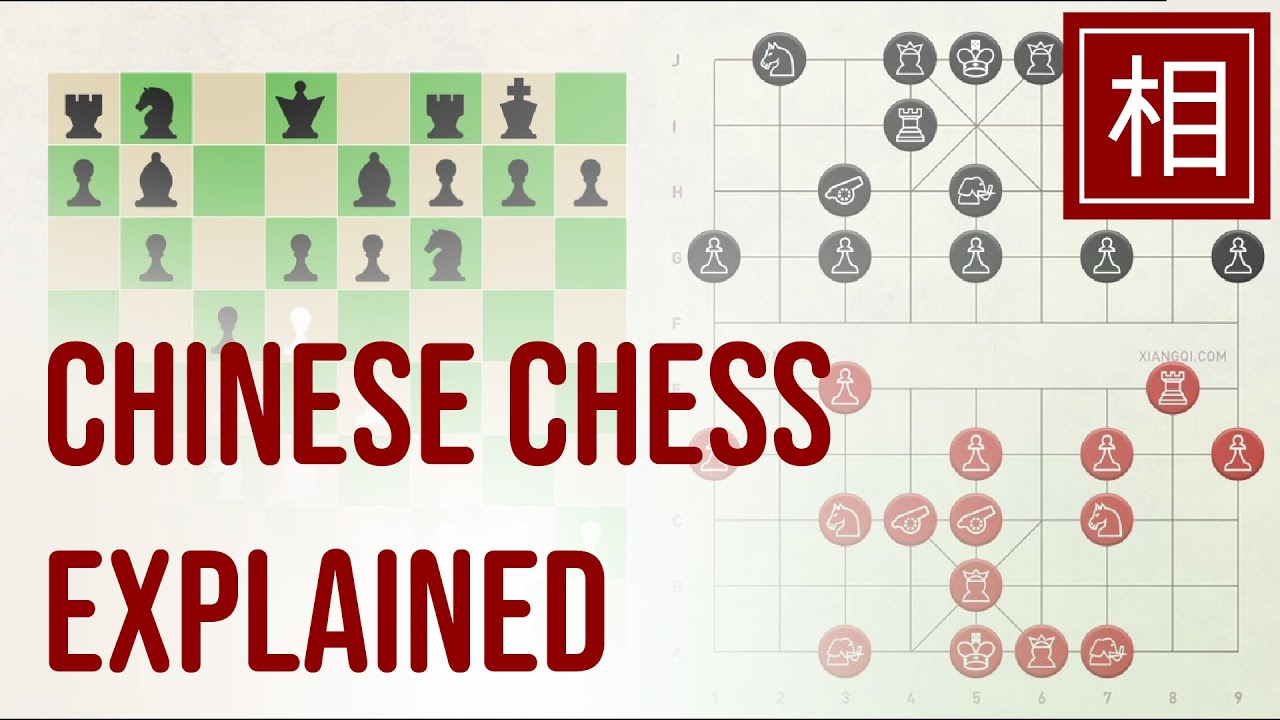
Can Chess Players Learn Xiangqi Easily? The Ultimate Transition Guide
Table of Contents
- 1. The Massive Advantages: What Carries Over Instantly
- Familiar Piece Archetypes
- Elite Tactical Infrastructure
- 2. The Culture Shock: Immediate Hurdles to Overcome
- Visual Identification: The Hanzi Characters
- The Myth of the Knight: Blocked Horses
- The Explosive Weaponry: The Cannon
- 3. Structural Shifts: Redefining Strategy
- Immediate Warfare vs. Deep Development
- Static Pawn Walls vs. High Fluidity
- 4. Why the Xiangqi Endgame Feels "Easier" for Chess Players
- The Final Verdict
For a seasoned Western Chess player, staring at a Xiangqi (Chinese Chess) board for the first time can feel both oddly familiar and utterly alien. You see a gridded battlefield, two armies, a clear objective to trap the enemy king, and pieces that look suspiciously like Rooks and Knights. But then you notice the blank spaces, the river splitting the board, and the circular discs inscribed with Chinese characters. This raises a highly debated question among board game enthusiasts: can chess players learn xiangqi easily? The short answer is yes, chess players can learn the foundational mechanics and tactics of Xiangqi incredibly quickly. However, achieving true mastery requires unlearning deep-seated chess habits, adapting to explosive tactical speeds, and mastering entirely unique piece mechanics. Here is a comprehensive breakdown of why chess players have a massive head start in Xiangqi—and the specific psychological hurdles they must overcome.
1. The Massive Advantages: What Carries Over Instantly
If you already understand Western Chess concepts like development, scanning files, and looking for tactical forks, you are already halfway to being a competent Xiangqi player.
Familiar Piece Archetypes
Several Xiangqi pieces have direct, near-identical twins in Western Chess, drastically shortening the initial rules explanation:
- The Chariot (Jū / 車): This piece is identical to the Western Rook. It moves and captures in straight orthogonal lines over any distance. Just like in chess, it is the most powerful piece on the board.
- The Horse (Mǎ / 馬): This piece is highly similar to the Western Knight, moving in an "L" shape.
- The Soldier (Bīng / 兵): This is the Xiangqi Pawn. It moves forward one square at a time and captures exactly how it moves (unlike the diagonal capture of chess pawns).
Elite Tactical Infrastructure
Chess players have already trained their brains in spatial visualization and pattern recognition. Concepts like pins, skewers, double attacks, and counting defenders translate perfectly. A chess player will naturally spot an unprotected piece or a tactical tactical blunder across the Xiangqi board much faster than a complete board-game novice.
2. The Culture Shock: Immediate Hurdles to Overcome
While the basic concepts transfer smoothly, Western Chess players frequently stumble into specific psychological traps during their first dozen games of Xiangqi.
Visual Identification: The Hanzi Characters
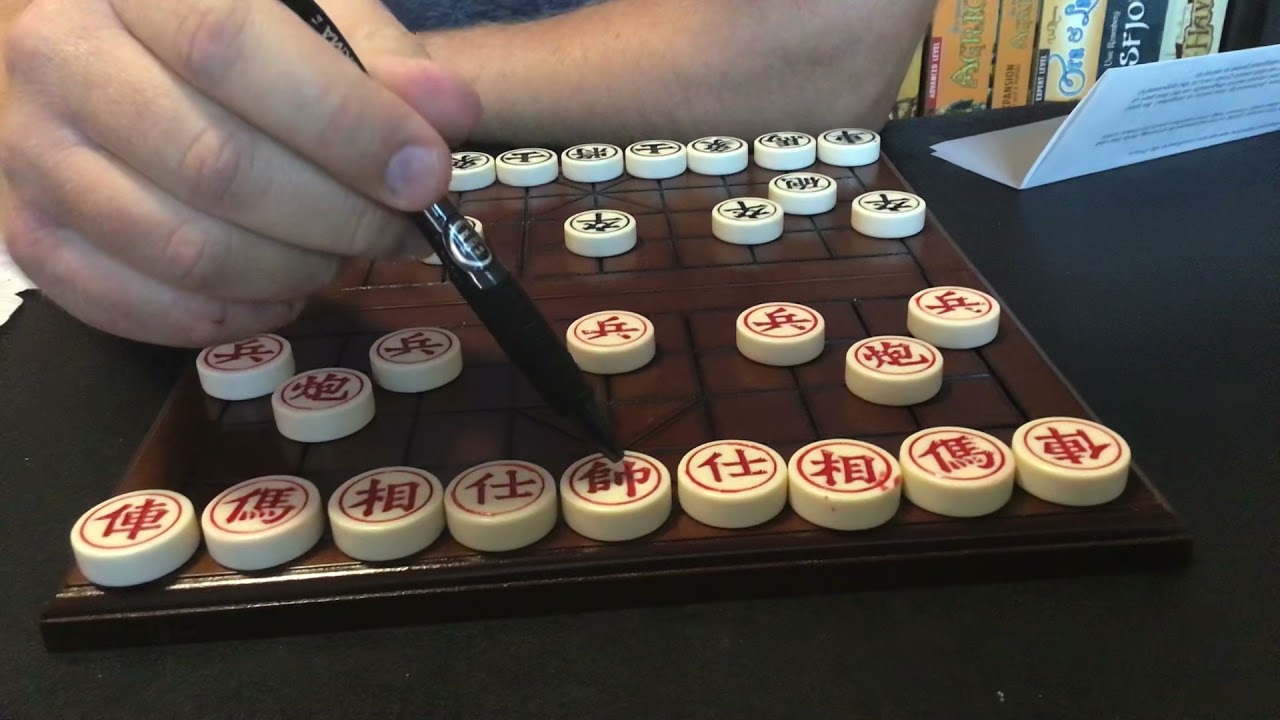
The most obvious initial barrier is that Xiangqi pieces are flat wooden or plastic discs differentiated only by traditional Chinese characters (Hanzi). Furthermore, the red and black armies often use entirely different characters for the exact same piece.
- The Fix: This hurdle looks intimidating but usually takes less than an hour to overcome. Players quickly learn to recognize the geometric shapes of the characters rather than learning the Chinese language itself.
The Myth of the Knight: Blocked Horses
In Western Chess, the Knight is famous for its ability to leap over any obstacle. In Xiangqi, the Horse can be blocked (known as Bié Mǎ Tuǐ or "blocking the horse's leg"). If an enemy or friendly piece occupies the intersection directly adjacent to the Horse along its straight path, it cannot make its diagonal jump in that direction. Chess players frequently leave their Horses vulnerable, forgetting they have been physically immobilized.
The Explosive Weaponry: The Cannon
The Cannon (Pào / 砲) has no equivalent in Western Chess. It moves like a Rook, but to capture an enemy piece, it must jump over exactly one intervening piece (called a "screen"). Chess players routinely fall victim to devastating early-game Cannon checks because they are not used to calculating attacks that leap over defensive barriers.
3. Structural Shifts: Redefining Strategy
The grand strategic philosophy of Xiangqi contrasts sharply with the slow, grinding positional play found in modern Western Chess.
Immediate Warfare vs. Deep Development
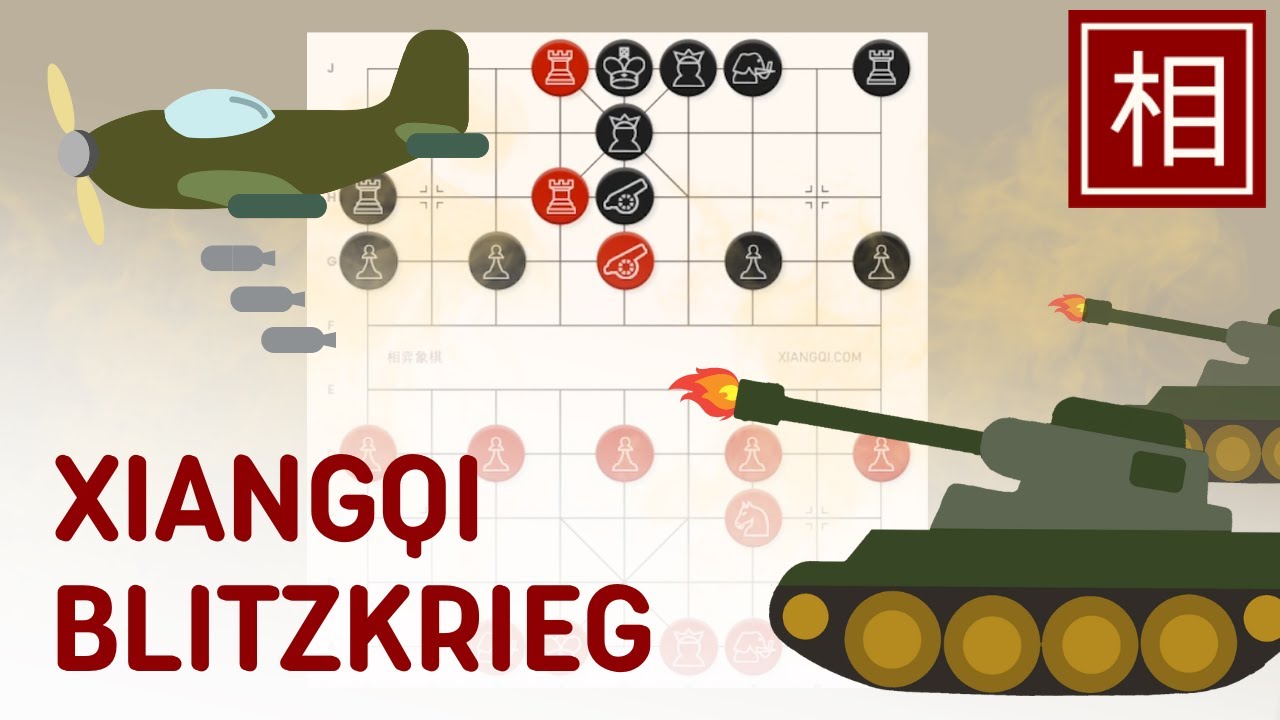
In Western Chess, the opening phase is highly structural. You control the center with pawns, safely develop minor pieces, and castle your king. Xiangqi throws you directly into a firefight. Because there are only 5 soldiers per side and they start spaced far apart, the board is wide open. Chariots and Cannons can infiltrate your territory on move two or three. Chess players who prefer a slow, cautious build-up often find themselves visually overwhelmed by the sheer speed of Xiangqi attacks.
Static Pawn Walls vs. High Fluidity
In Chess, pawn structures are permanent liabilities or assets. They dictate where pieces can safely stand. In Xiangqi, the "pawns" cross the river, gain the ability to move horizontally, and cannot promote into Queens. They do not form rigid, interlocking chains. As a result, Xiangqi strategy is hyper-focused on dynamic piece mobility and coordination rather than static territorial control.
| Strategic Element | Western Chess | Xiangqi (Chinese Chess) |
|---|---|---|
| King Safety | Castling into a corner pocket | Constrained to a 3x3 "Palace" fortress |
| Opening Pace | Methodical, structural development | Immediate, explosive long-range attacks |
| Pawn Dynamics | Interlocking chains, permanent structures | Fluid skirmishers, no promotion to major pieces |
| Draw Rate | Very high at master levels (Stalemate = Draw) | Significantly lower (Stalemate = Win) |
4. Why the Xiangqi Endgame Feels "Easier" for Chess Players
One area where chess players feel an immense sense of relief is the endgame phase. In Western Chess, converting an endgame advantage requires flawless mathematical precision due to the Stalemate rule—if an opponent has no legal moves but isn't in check, it's a draw. In Xiangqi, Stalemate counts as a definitive win for the attacking side. Additionally, the "Flying General" rule dictates that the two Kings (Generals) cannot face each other on the same open file without pieces between them. This essentially gives your General an invisible laser beam down the board, controlling crucial squares and making checkmating matrices significantly easier to execute than in Western Chess.
The Final Verdict
Can chess players learn xiangqi easily? Absolutely. If you already play chess, you possess the mental hardware required to pick up Xiangqi in a single afternoon. You will bypass the grueling beginner stage that non-gamers face, moving straight into engaging tactical battles. However, do not mistake a fast start for an easy journey. Adapting to the restricted Palace, calculating the shifting geometry of Cannon screens, and managing the claustrophobia of blocked Horses will thoroughly test your strategic limits.
Comments (0)
You need to log in to join the discussion.
No comments yet. Be the first to share your thoughts!