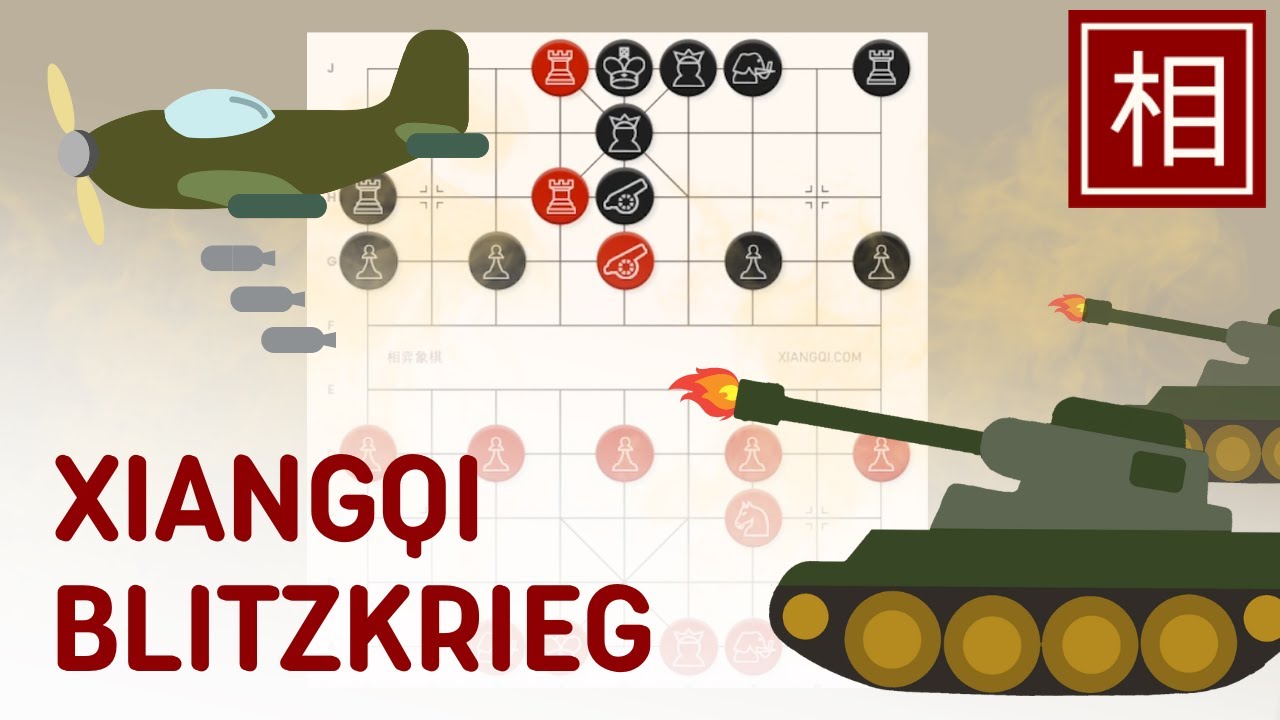
Crushing Opponent in 10 turns in Chinese Chess
Table of Contents
If you are coming to Xiangqi (Chinese Chess) from Western Chess, the first thing you will notice is the sheer speed of the game. Western chess often begins with a slow, methodical build-up of pawn structures, fighting for incremental space. Xiangqi, on the other hand, is a game of immediate, violent action. The lines are open, the artillery is loaded, and the General is under threat from move one. If you want to master the art of crushing opponent in 10 turns in Chinese Chess, you have to embrace this aggressive philosophy. A 10-turn victory (often referred to as 20 plies, or half-moves) isn't just a hypothetical scenario reserved for grandmasters playing against absolute beginners. It happens frequently in club games and online matchmaking. Because of the unique movement of the Cannon (which needs to jump over another piece to capture) and the open files for the Chariots (Rooks), early blunders in Xiangqi are punished with brutal efficiency. In this guide, we are going to break down the anatomy of a rapid checkmate, explore the most common early-game traps, and show you exactly how to execute a 10-turn crush when your opponent steps out of line.
The Philosophy of the Blitzkrieg
To win in under 10 turns, you cannot play a quiet positional game. You must dictate the tempo. In Xiangqi, tempo (the advantage of time) is often more valuable than material. Sacrificing a Horse or even a Chariot to open a direct line of fire to the enemy General is a standard tactic if it leads to an unavoidable mate. The foundation of almost every fast checkmate lies in the center of the board. The General cannot leave the 3x3 Palace, meaning his mobility is severely restricted. If you can control the central file (the 5th file), you effectively cut the board in half and pin the enemy General in place. This is why the most aggressive, and most popular, opening in the game is the Central Cannon (Zhong Pao). By moving your Cannon immediately to the center file on turn one, you are pointing a loaded gun directly at the opponent's General. How they respond to this threat dictates whether the game will be a long strategic grind or a 10-turn bloodbath.
Pattern 1: The Smothered Mate (Double Cannon)
One of the most embarrassing ways to lose—and most satisfying ways to win—is the Double Cannon Mate (Shuang Pao Jiang). This trap frequently occurs when an inexperienced Black player tries to mirror Red's aggression without developing their defensive pieces.
The Setup
- Red: Moves the Cannon to the center file (Zhong Pao).
- Black: Mirrors the move, moving their Cannon to the center file (Shun Pao / Same Direction Cannon).
This is a valid opening, but it creates a razor-sharp position where one misstep is fatal.
The Trap
If Black gets greedy and immediately uses their central Cannon to capture Red's central pawn on turn 2 or 3, they are setting themselves up for disaster. By capturing the pawn, Black's Cannon is now sitting directly in front of Red's General. Red simply develops their Horses to protect their center. Black, feeling aggressive, might bring their Rooks out. But Red has a hidden trick. Red sacrifices a piece (usually a Horse) to lure Black's defending pieces away from the center. With the center clear, Red slides their second Cannon directly behind their first central Cannon. Because a Cannon needs a "screen" to jump over, the first Cannon acts as the springboard. The second Cannon fires over it, directly hitting the Black General. Because Black never moved their Advisors or Elephants to block the center, the General is pinned. Checkmate. Total turns: Usually between 7 and 9.
Pattern 2: The Iron Door Bolt (Tie Men Shuan)
If you are looking for a reliable way of crushing opponent in 10 turns in Chinese Chess, the Iron Door Bolt is your best friend. This mate relies on the terrifying synergy between a Cannon and a Chariot (Rook). The concept is simple but deadly:
- You use a Central Cannon to lock down the middle file. The Cannon prevents the enemy General from moving left or right out of the center column, acting like the "bolt" on a door.
- You use a Chariot to crash into the Palace on the General's rank, delivering the fatal blow.
The 10-Turn Execution
This trap often occurs against the "Screen Horse" defense, where Black develops both Knights to protect the center pawn.
- Turns 1-4: Red opens with the Central Cannon. Red aggressively pushes a pawn forward and develops a Chariot quickly. Black plays solidly, developing Horses and an Elephant.
- Turn 5-7: Red deliberately leaves a piece seemingly undefended on the side of the board. Black takes the bait, moving their Chariot away from the center to capture the "free" material.
- Turn 8: Red's Central Cannon is now exerting massive pressure. Red sacrifices a Horse to smash open Black's central Elephant defense.
- Turn 9: Black, forced to respond, captures the sacrificed piece, completely opening the "door" to their Palace.
- Turn 10: Red slides their Chariot down to the opponent's back rank. The Chariot is staring the General in the face. The General cannot capture the Chariot because it is protected by the Central Cannon. The General cannot move left or right because the Central Cannon covers those escape squares. The door is bolted. Checkmate.
Pattern 3: The Horse-Cannon Mate (Ma Pao Sha)
The Horse is the trickiest piece on the Xiangqi board because it can be blocked. However, when paired with a Cannon, it creates an unblockable matrix of attack. This quick win often happens when opponents try to develop their Chariots too early, leaving their Palace vulnerable to flanking maneuvers. If Red can maneuver a Horse to the "Palace Corner" (the upper left or right corner of the enemy's 3x3 Palace), it threatens the General with an L-shaped check. If the opponent ignores this to push an attack on the other side of the board, Red finishes the game instantly. Red moves a Cannon to the same side of the board. The Horse acts as the Cannon's "mount" or screen. The Cannon jumps over the Horse, putting the General in check. If the General moves away from the Cannon, it steps right into the path of the Horse. It is a lethal crossfire that routinely ends games before the 10th turn.
How to Defend Against the 10-Turn Crush
The thrill of executing a rapid checkmate is unmatched, but what happens when you are on the receiving end? How do you survive the opening onslaught?
- Do Not Get Greedy: Fast checkmates almost always rely on sacrifices. If your opponent offers you a free Horse or Chariot on turn 6, be incredibly suspicious. Ask yourself: If I take this, what lines open up against my General?
- Develop the Advisors (Shi): The Advisors are your General's bodyguards. Moving an Advisor up early in the game blocks the central file and instantly defuses the threat of a Central Cannon.
- Do Not Move the General Unnecessarily: Every move in the opening should be about developing your Horses, Cannons, and Chariots. Moving your General or Advisors too early (without a direct threat) wastes a vital tempo.
Crushing an opponent in 10 turns in Chinese Chess requires sharp tactical vision and a willingness to embrace risk. By mastering the Central Cannon, the Iron Door Bolt, and the Double Cannon traps, you will stop playing the long game and start ending matches before your opponent even has a chance to develop their pieces.
Comments (0)
You need to log in to join the discussion.
No comments yet. Be the first to share your thoughts!