Learn how to read Chinese chess pieces quickly
Table of Contents
- The Core Concept: Why Red and Black Look Different
- A Piece-by-Piece Visual Guide
- 1. The General / King (帥 vs. 將)
- 2. The Advisor / Guard (仕 vs. 士)
- 3. The Elephant / Bishop (相 vs. 象)
- 4. The Horse / Knight (傌 vs. 馬)
- 5. The Chariot / Rook (俥 vs. 車)
- 6. The Cannon (炮 vs. 砲)
- 7. The Soldier / Pawn (兵 vs. 卒)
- 3 Pro-Tips for Rapid Memorization
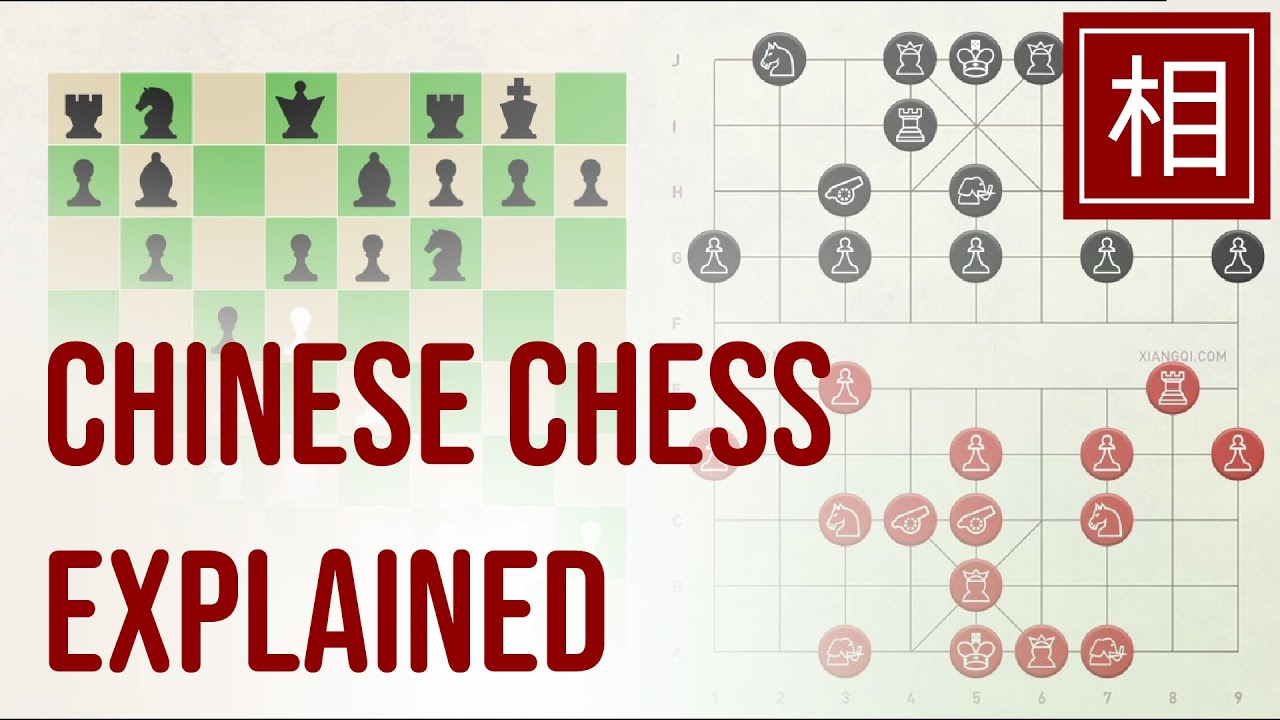
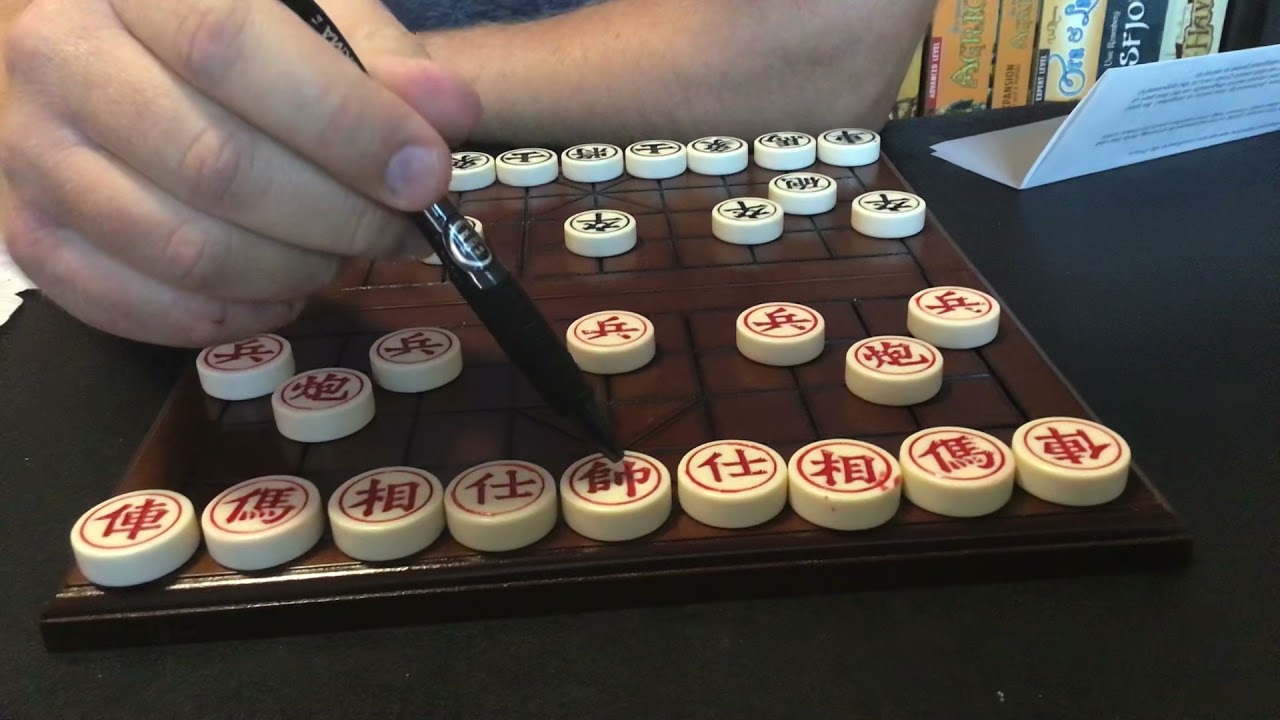
Have you ever looked at a Xiangqi board and felt completely lost? You are certainly not alone. For many beginners, the biggest hurdle to enjoying this ancient, highly tactical game isn't the complex strategy or the rules of movement—it is the language barrier. If you want to learn how to read Chinese chess pieces quickly, you have come to the right place. Xiangqi, universally known as Chinese chess, is one of the most popular board games in the world, boasting hundreds of millions of active players. However, unlike International Chess, which uses distinctly shaped 3D figures (like a carved horse head for a Knight or a tower for a Rook), Xiangqi uses uniform, flat wooden discs. The only way to tell a piece's identity is by reading the single Chinese character painted on its face. To someone unfamiliar with Chinese characters, a board full of these discs can look like an impenetrable wall of complex scribbles. Here is the good news: breaking this visual code is far easier than it looks. You do not need to learn how to read or speak Chinese to play Xiangqi. You simply need to use a bit of visual pattern recognition. By associating the shapes, strokes, and layouts of the characters with their functions—and using a few clever mnemonic devices—you can instantly recognize your Chariots from your Cannons. By the end of this comprehensive guide, you will be able to look at any Xiangqi board and immediately understand the battlefield.
The Core Concept: Why Red and Black Look Different
Before diving into the individual pieces, we need to address the single most confusing aspect of the game for newcomers. In Xiangqi, the two competing armies are Red and Black. However, they don't just use different colored ink—they often use entirely different characters for the exact same piece! Historically, this was done to represent two distinct warring states. The Red side represents the Han dynasty, while the Black side represents the Chu state. Because they are two different armies, they use different terminology for their ranks. For example, the Red side is led by a "Commander," while the Black side is led by a "General." They function exactly the same way, but the symbol is completely different. (Note: In some modern, inexpensive sets, manufacturers simply use the exact same character for both sides and only change the ink color. But traditional and tournament sets will always feature the distinct characters, so it is best to learn both.) To learn how to read Chinese chess pieces quickly, you don't need to memorize the dictionary definitions. You just need to spot the visual "hacks" in the shapes.
A Piece-by-Piece Visual Guide
Let's break down the seven types of pieces on the board. For each piece, we will look at the Red character, the Black character, and the visual trick you can use to remember them instantly.
1. The General / King (帥 vs. 將)
The General is the most important piece on the board, equivalent to the King in western chess. If you lose your General, you lose the game.
- Red (帥 - Shuài): Represents a Commander.
- Black (將 - Jiàng): Represents a General.
- The Visual Trick: You can always find the Generals because they are confined to the "Palace"—the 3x3 square grid with diagonal lines intersecting at the bottom center of the board. Look at the Red character (帥). The right side looks remarkably like a banner or a flag hanging straight down on a pole, fitting for a commander's tent. The Black character (將) is much denser and blockier, resembling a heavily armored general sitting rigidly on a throne. If a piece is trapped in the center of the Palace, it is the General.
2. The Advisor / Guard (仕 vs. 士)
The Advisors are the General's personal bodyguards. Like the General, they never leave the confines of the Palace, moving only along its diagonal lines.
- Red (仕 - Shì): Represents an Advisor.
- Black (士 - Shì): Represents a Guard.
- The Visual Trick: These are the simplest, cleanest characters on the entire board, reflecting their straightforward defensive role. The Black character (士) is simply a cross resting on top of a horizontal baseline. It looks like a simple sword hilt or a warrior's shoulder pads. The Red character (仕) is the exact same cross-shape, just with an extra vertical stroke (the "person" radical) standing next to it on the left. Think of them as simple, sturdy shields.
3. The Elephant / Bishop (相 vs. 象)
Elephants are defensive pieces that move diagonally but are not allowed to cross the river into enemy territory.
- Red (相 - Xiàng): Represents a Minister.
- Black (象 - Xiàng): Represents an Elephant.
- The Visual Trick: The Black character (象) actually looks quite a bit like a real elephant if you use your imagination! The top block is the head, the middle strokes are the ribcage, and the long, sweeping stroke swooping down to the right is the elephant's trunk. The Red Minister (相) is completely different: it is split cleanly into two halves. The left side is a tree (木), and the right side is a box with horizontal lines inside, which represents an eye (目). Just look for the "tree and eye" to spot the Red Minister.
4. The Horse / Knight (傌 vs. 馬)
The Horse moves identically to the Knight in western chess (one point orthogonally, one point diagonally), with the exception that its path can be physically blocked by other pieces.
- Red (傌 or 馬 - Mǎ): Represents a Horse.
- Black (馬 - Mǎ): Represents a Horse.
- The Visual Trick: The Horse is one of the absolute easiest pieces to identify! Look closely at the bottom of the Black character (馬). Do you see the row of four distinct dots (灬)? Those represent the four galloping legs of a horse! The upper portion of the character resembles the horse's neck and flowing mane. Once you associate those four dots with horse legs, you will never struggle to find this piece again. Red uses the same character, sometimes adding a single vertical line on the far left (傌).
5. The Chariot / Rook (俥 vs. 車)
The Chariot is the most powerful offensive piece on the board, moving exactly like a Rook in international chess—straight lines, any distance. They start in the four outermost corners of the board.
- Red (俥 or 車 - Jū): Represents a Chariot.
- Black (車 - Jū): Represents a Chariot.
- The Visual Trick: Look at the character (車). It looks like a square box with a single, bold vertical line striking directly through its center, capped by horizontal lines on the top and bottom. Imagine you are looking straight down from above at a traditional two-wheeled wooden cart. The central box is the carriage where the rider stands, and the long vertical line passing through it is the axle connecting the two wheels. It looks rigid, linear, and fast—perfectly matching how it moves across the board.
6. The Cannon (炮 vs. 砲)
The Cannon is a piece entirely unique to Xiangqi. It moves in straight lines like a Chariot, but to capture an enemy piece, it must jump over exactly one other piece (the "screen").
- Red (炮 - Pào): Represents a Cannon.
- Black (砲 - Pào): Represents a Catapult.
- The Visual Trick: Both the Red and Black characters share the exact same right half (包), which looks like a rounded hook or shell wrapping around a smaller inner box. The left side is where they differ, and it tells a functional story! The Red Cannon (炮) features the "fire" radical (火) on the left, looking like dancing flames—representing an explosive gunpowder cannon. The Black Cannon (砲) features the "stone" radical (石) on the left, looking like a square rock sitting under a cliff edge—representing a mechanical stone-throwing catapult. Fire and stone; both are artillery!
7. The Soldier / Pawn (兵 vs. 卒)
Soldiers move forward one space at a time. Once they cross the river into enemy territory, they gain the ability to move sideways as well. Each side starts with five Soldiers arranged in a staggered row.
- Red (兵 - Bīng): Represents a Soldier.
- Black (卒 - Zú): Represents a Pawn.
- The Visual Trick: Both of these characters feature a strong, prominent horizontal baseline at the bottom, grounding them to the earth. The Red Soldier (兵) looks like a person standing firmly with two legs spread apart over the ground—a grounded infantryman ready for battle. The Black Soldier (卒) looks like two smaller people crossing over a horizontal line together. Because they are the most numerous pieces on the board and are placed in a prominent line right before the river, their sheer quantity makes them easy to identify through process of elimination.
3 Pro-Tips for Rapid Memorization
If you want to speed up your learning curve even further, keep these three pattern recognition hacks in mind:
- The "Person" Hack for Red Pieces: Many traditional Red pieces (Advisor 仕, Horse 傌, Chariot 俥) are simply the Black character with a specific symbol attached to the left side (亻). This symbol means "person." If you see a character that looks exactly like a Black piece but has that extra vertical line on the left, you are looking at the Red equivalent.
- Use Board Geography: You don't always have to read the piece; you can look at where it lives. A piece trapped inside the Palace has to be a General or an Advisor. A piece stationed in the far corners has to be a Chariot. A piece sitting on the edge of the river is a Soldier. Context clues do half the reading for you.
- Learn One Color First: Do not try to memorize all 14 symbols at once. Play your first few games exclusively as the Black pieces. Once you are intimately familiar with the Black characters, switch to Red.
Learning how to read Chinese chess pieces quickly does not require months of language study. By attaching a visual story to each character—the galloping legs of the Horse, the fiery left side of the Cannon, or the top-down view of the Chariot—the board will transform from a confusing puzzle into a clear, readable battlefield in a matter of hours.
Comments (0)
You need to log in to join the discussion.
No comments yet. Be the first to share your thoughts!