How to Choose Your First Move in Xiangqi?
Table of Contents
- The Philosophy of the First Move: Tempo and Initiative
- Option 1: The Aggressor's Choice – The Central Cannon (Zhong Pao)
- Why play it?
- The resulting gameplay:
- Option 2: The Strategist's Choice – The Flying Elephant (Fei Xiang)
- Why play it?
- The resulting gameplay:
- Option 3: The Probing Move – Pointing the Way (Xian Ren Zhi Lu)
- Why play it?
- The resulting gameplay:
- Option 4: The Balanced Approach – The Edge Horse (Tiao Ma)
- Why play it?
- The resulting gameplay:
- Offbeat and Surprise Openings
- Final Thoughts: Making Your Choice
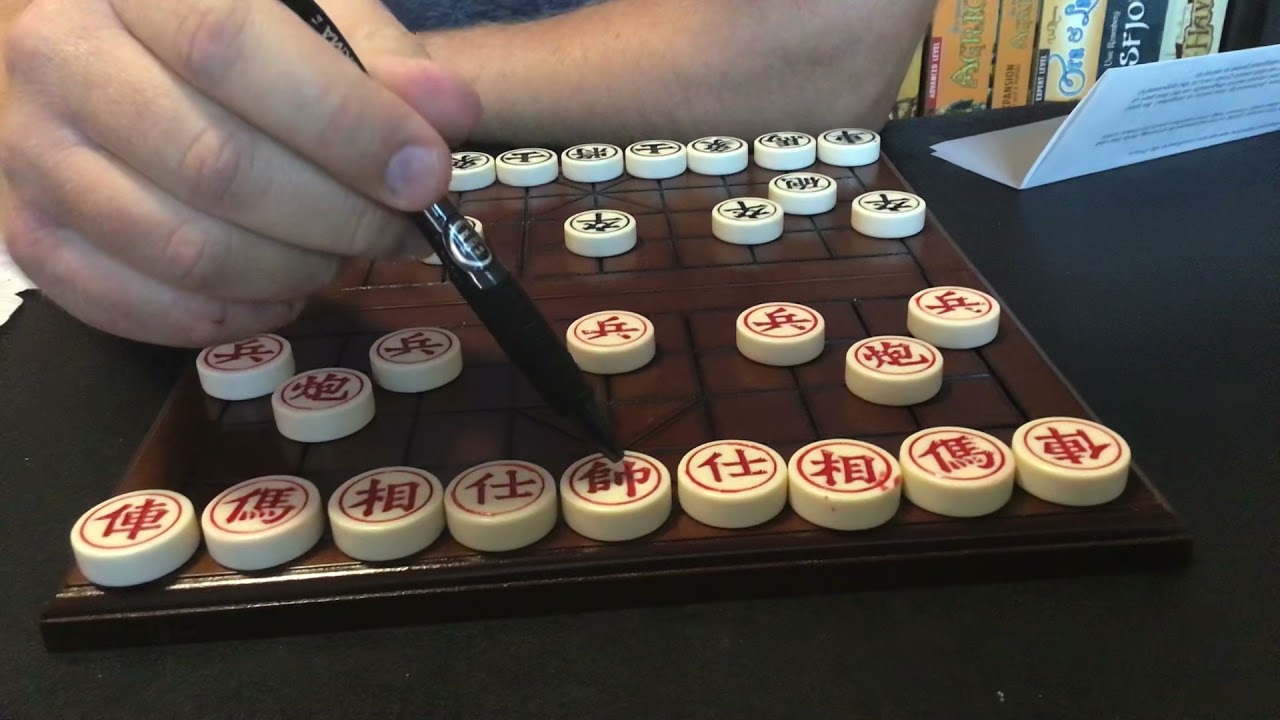
The starting position of a Xiangqi board is a beautifully symmetrical, tension-filled battlefield. Fourteen pieces face off across the river, waiting for a single command to spring into action. But when you are sitting in the commander's seat playing as Red (the side that has the privilege of moving first), that initial blank slate can feel incredibly daunting. With so many valid options, learning how to choose your first move in Xiangqi is the absolute most important step toward dictating the flow, tempo, and ultimate outcome of the game. In international chess, White's first move is usually a pawn pushing forward to fight for the center of the board. In Xiangqi, the center is equally vital, but the pieces you use to contest it are completely different. Your opening move is not just a tactical decision; it is a declaration of your strategic intentions to your opponent. Are you looking for a rapid, aggressive skirmish, or a slow, calculated, positional grind? Let's dive deep into the philosophy of the opening phase and explore the most effective first moves you can deploy.
The Philosophy of the First Move: Tempo and Initiative
Before looking at specific piece movements, we must understand why Red's first move carries so much weight. In Xiangqi, the advantage of moving first (known as the initiative) is statistically massive. Red gets to ask the first question, forcing Black to immediately go on the defensive and respond. Modern, top-tier open-source Xiangqi engines like Pikafish can evaluate millions of positions per second, mathematically proving that Red holds a fractional but distinct advantage from ply one. However, an engine's absolute "best" move might lead to highly complex, razor-sharp variations that are an absolute nightmare for a human to memorize and defend. Therefore, the goal is not merely to play what a computer deems optimal, but to choose a first move that aligns perfectly with your personal comfort zone and playstyle. The core objectives of your first move should always be:
- Development: Mobilizing your major pieces (Cannons, Horses, Chariots) rapidly.
- Central Control: Establishing dominance or influence over the 5th (middle) file.
- Security: Preparing a harmonious defensive structure to protect your General.
Let's look at the four major ways to accomplish this.
Option 1: The Aggressor's Choice – The Central Cannon (Zhong Pao)
(Notation: C2=5 or C8=5) If you want to put immediate, terrifying pressure on your opponent, the Central Cannon is the undisputed king of openings. By moving either of your Cannons directly to the middle file, you are pointing a loaded weapon straight down the board at the enemy General.
Why play it?
It is the most popular opening at all levels of play, from casual park games to grandmaster tournaments. It instantly controls the center and demands a precise, immediate defensive response from Black—usually the Screen Horse Defense, where Black is forced to develop both of their horses to protect their central pawn.
The resulting gameplay:
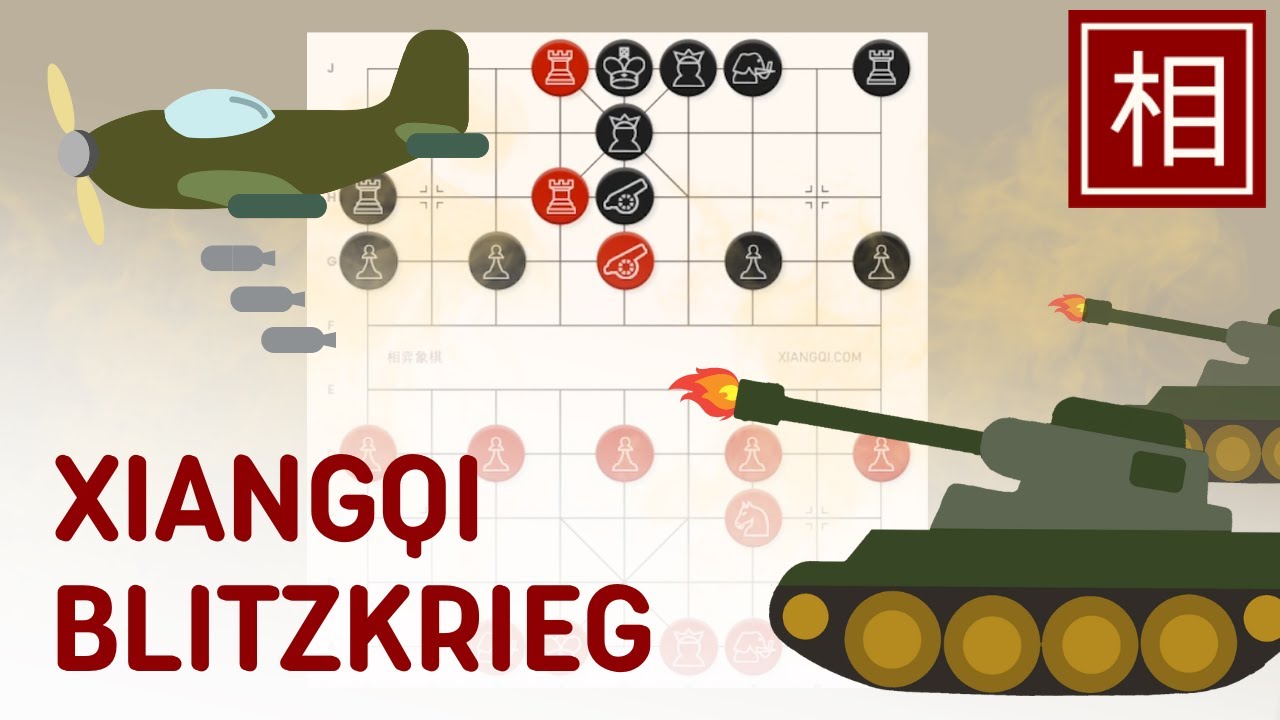
Games that begin with the Central Cannon are almost always sharp, tactical, and highly explosive. You are explicitly prioritizing offense over defense. If you enjoy calculating deep, complex variations, willingly sacrificing material for a positional advantage, and playing a "blitzkrieg" style of Xiangqi, this should be your go-to first move.
Option 2: The Strategist's Choice – The Flying Elephant (Fei Xiang)
(Notation: E3+5 or E7+5) Not every game needs to start with fireworks. Moving your Elephant to the center of your Palace is a deeply respected, highly resilient opening that completely flips the script on aggressive players.
Why play it?
The Flying Elephant immediately fortifies your central defense. By linking your Elephants early, you create a solid, overlapping shield against potential Cannon attacks. Furthermore, this move is incredibly flexible. Because you haven't committed your offensive pieces (your Horses and Cannons) to specific files yet, you can adapt your eventual attack based on exactly how Black chooses to deploy their forces.
The resulting gameplay:
This opening leads to what grandmasters call "soft" or positional games. The battles here are rarely won in the first 15 moves; they are won through incremental advantages, superior pawn structures, and slowly outmaneuvering the opponent in the endgame. If you are a patient, calculating player who prefers to let the opponent make the first mistake while you build an impenetrable fortress, the Flying Elephant is a masterful choice.
Option 3: The Probing Move – Pointing the Way (Xian Ren Zhi Lu)
(Notation: P3+1 or P7+1) Translating poetically to "Immortal Pointing the Way," this opening involves pushing either your 3rd or 7th file Pawn forward one single step. To a beginner, it might look entirely passive, but it is actually one of the most sophisticated opening choices in the game.
Why play it?
Pushing this pawn achieves several strategic goals simultaneously. First, it opens up the file for your own Horse to advance without being physically blocked. Second, and much more importantly, it directly restricts the opponent's Horse on that exact same file. If they try to move their Horse forward normally, your pushed pawn is ready to cross the river and cause immediate chaos in their ranks.
The resulting gameplay:
This is the ultimate testing move. You are essentially passing the turn back to Black, asking them to reveal their grand plans before you commit your major artillery. Depending on Black's response, Red can seamlessly transition into a Central Cannon attack or adopt a more conservative Elephant defense structure. It is the perfect opening for highly adaptable players who want to maintain maximum flexibility.
Option 4: The Balanced Approach – The Edge Horse (Tiao Ma)
(Notation: H2+3 or H8+7) Moving a Horse forward is a fundamental principle of Xiangqi development. An old Chinese proverb regarding the game states, "A Horse unprepared is a game easily lost."
Why play it?
The Horse opening is incredibly solid and fundamentally sound. It protects your central pawn, prepares your forces to contest the middle of the board, and allows for the lightning-fast deployment of your Chariots (Rooks) from the corners. Unlike the Central Cannon, which is an all-out frontal assault, the Horse opening strikes a beautiful balance between developing offensive threats and securing your defensive lines.
The resulting gameplay:
Expect a balanced, orthodox game. The tension will slowly build across the board as both sides maneuver their pieces to optimal squares before the first major skirmish inevitably breaks out around the river.
Offbeat and Surprise Openings
While the four openings detailed above cover the vast majority of high-level games, there are a few unconventional choices if you want to immediately throw your opponent out of their comfort zone:
- The Cross Palace Cannon (Guo Gong Pao): Moving the Cannon horizontally across the Palace (C2=6 or C8=4). This immediately opens the file for your Chariot while heavily defending one specific flank. It is highly unorthodox and can easily confuse a player who has only memorized standard Central Cannon defenses.
- The Edge Cannon (Bian Pao): Moving the Cannon to the extreme outer edge of the board (C2=1 or C8=9). This is entirely focused on rapidly developing the Chariot on the open file, though it completely sacrifices early central control.
Final Thoughts: Making Your Choice
Ultimately, learning how to choose your first move in Xiangqi relies on self-awareness. Do you thrive in chaotic, highly tactical slugfests? Play the Central Cannon. Do you prefer a methodical, unshakeable defense? Open with the Flying Elephant. Do you want to test the waters and remain endlessly adaptable? Push a Pawn. The beautiful thing about this ancient game is that the board perfectly accommodates every type of strategic mind. Pick the opening that resonates with your personal philosophy, memorize a few standard responses, and you will never feel lost looking at a fresh board again.
Comments (0)
You need to log in to join the discussion.
No comments yet. Be the first to share your thoughts!