How to Play Chinese Chess for Beginners: A Step-by-Step Guide
Table of Contents
Chinese Chess, known as Xiangqi (象棋), is one of the most popular board games in the world. While it shares ancient roots with Western chess, Xiangqi offers a unique battlefield with distinct pieces, a dividing river, and dynamic tactical opportunities. If you have ever wanted to learn this deeply strategic game but felt intimidated by the Chinese characters on the pieces, this guide is for you. Here is everything you need to know about how to play Chinese chess for beginners step by step, from setting up the board to executing your very first checkmate.
1. Understanding the Xiangqi Board
The Chinese Chess board consists of a grid of lines rather than a checkered pattern of squares. Pieces are placed and moved on the intersections of these lines, called points. The board features two unique geographical markers:
- The River (Chu He Han Jie): This is the wide horizontal blank space in the center of the board. It divides the two territories and changes how certain pieces behave.
- The Nine Palaces: On each side of the board, you will see a 3x3 area marked with diagonal lines forming an "X". This is the fortress where the General and Advisors must remain.
2. Meet the Pieces and Their Moves
Each player commands an army of 16 pieces. One side plays Red (or sometimes white/gold), and the other plays Black (or green). The pieces are flat discs stamped with Chinese characters. Do not worry about memorizing the characters immediately; focus on their shapes and unique movement rules.
The General (King)
- Characters: 帥 (Red) / 將 (Black)
- Movement: Moves exactly one point horizontally or vertically.
- Restriction: Can never leave the Nine Palaces. Furthermore, the two opposing Generals can never face each other directly on the same vertical file without any pieces between them. This is called the "Flying General" rule, allowing a General to control an open file like a Rook.
The Advisor (Guard)
- Characters: 仕 (Red) / 士 (Black)
- Movement: Moves exactly one point diagonally.
- Restriction: Like the General, Advisors can never leave the Nine Palaces. They act as your inner circle of defense.
The Elephant (Bishop)
- Characters: 相 (Red) / 象 (Black)
- Movement: Moves exactly two points diagonally (in an "V" shape).
- Restriction: Elephants cannot cross the central River. They are strictly defensive pieces. Additionally, they can be blocked if another piece sits on the intermediate point of their diagonal jump (known as "blocking the Elephant's eye").
The Horse (Knight)
- Characters: 傌 (Red) / 馬 (Black)
- Movement: Moves one point horizontally or vertically, and then one point diagonally outward. This is similar to the "L-shape" in Western chess.
- Restriction: The Horse can be blocked. If an enemy or friendly piece is sitting on the immediate adjacent point horizontally or vertically before the diagonal step, the Horse cannot move in that direction. This is called "blocking the Horse's leg."
The Chariot (Rook)
- Characters: 俥 (Red) / 車 (Black)
- Movement: Moves any number of vacant points horizontally or vertically.
- Power: This is the most powerful attacking piece on the board because of its unrestricted mobility across the entire grid.
The Cannon
- Characters: 炮 (Red) / 砲 (Black)
- Movement: Moves exactly like the Chariot when it is not capturing (any number of vacant points horizontally or vertically).
- Capturing: To capture an enemy piece, the Cannon must jump over exactly one piece of any color, known as the "screen" or "cannon platform." It then lands directly on the target enemy piece.
The Soldier (Pawn)
- Characters: 兵 (Red) / 卒 (Black)
- Movement: Before crossing the River, Soldiers can only move one point forward. They cannot move sideways or backward.
- After crossing the River: Once a Soldier crosses the River into enemy territory, it gains the ability to move one point horizontally (left or right) as well as forward. Soldiers can never move backward.
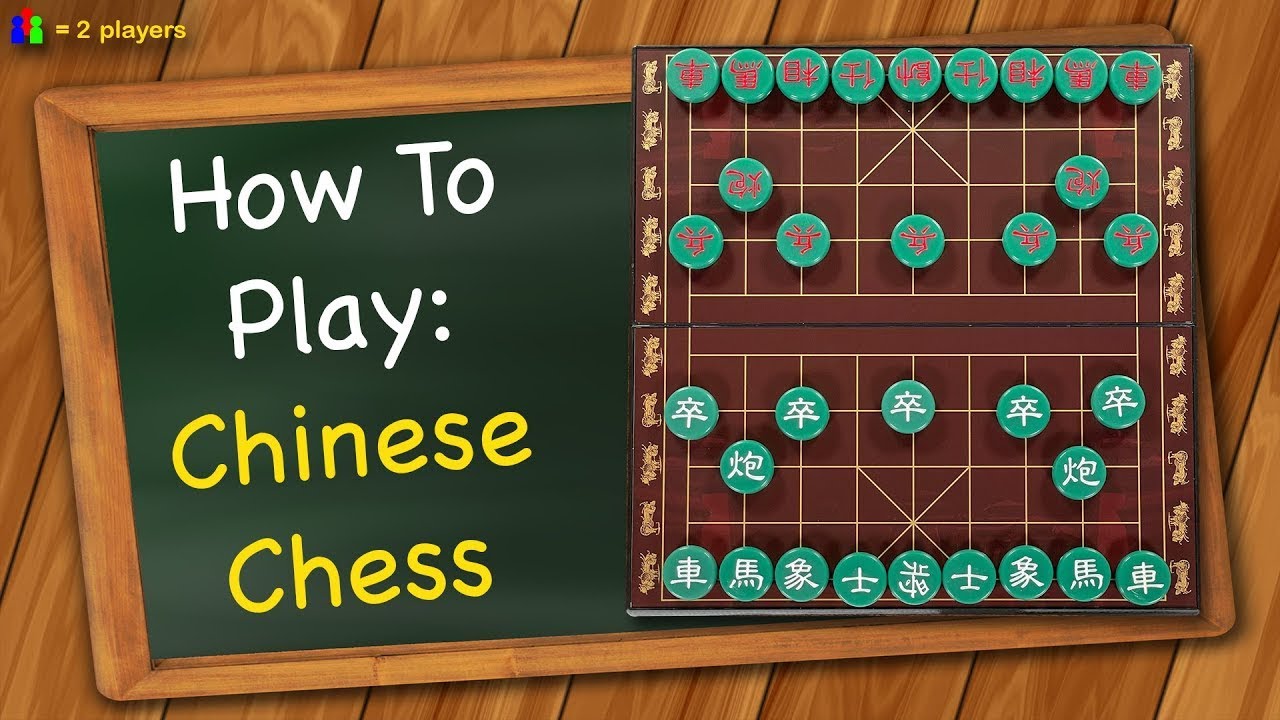
3. How to Set Up the Board
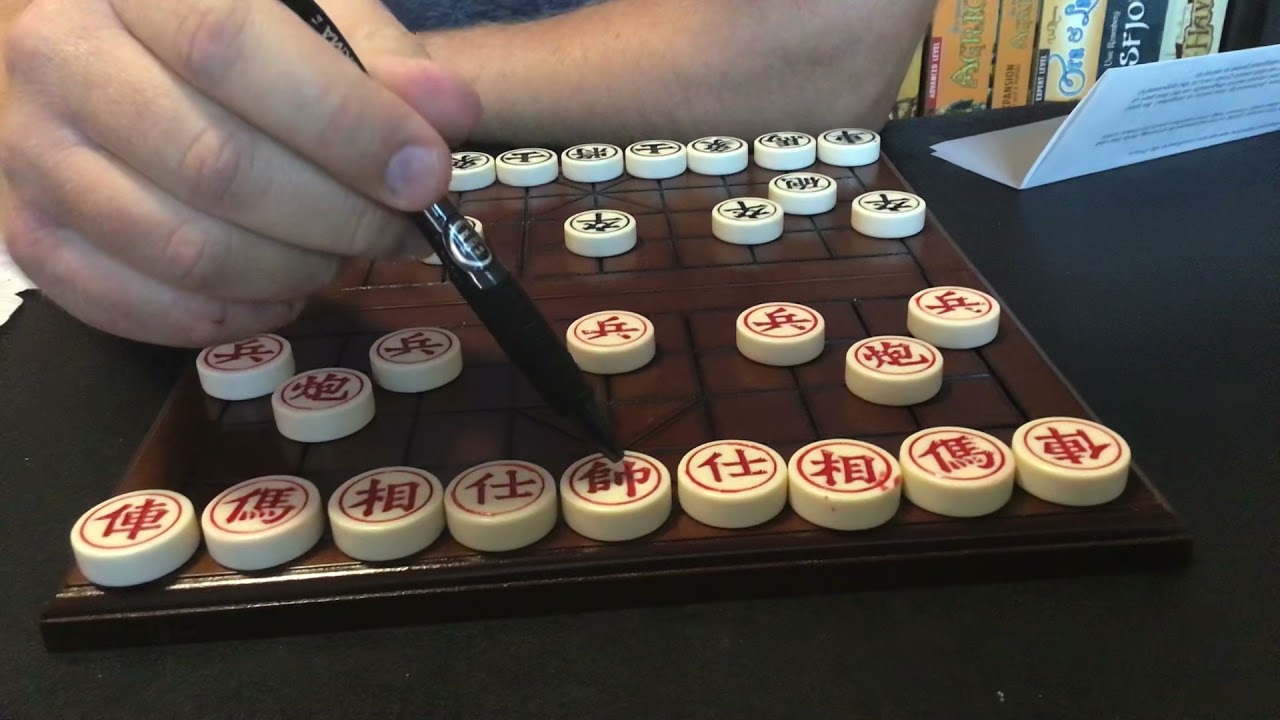
Setting up a Xiangqi board is straightforward once you know the coordinates. Place the pieces on the intersections of the row closest to you (the baseline) and the two rows just ahead of it:
- Baseline: Place your General in the center point of the Nine Palaces. Flank the General with two Advisors, then two Elephants, then two Horses, and finally two Chariots on the outer corners.
- Row 3: Place your two Cannons on the intersections two lines ahead of your Horses.
- Row 4: Place your five Soldiers on every other intersection along the line right before the River.
4. Gameplay Rules and Objective
The objective of Chinese Chess is to checkmate (Jiang Jun) the enemy General. You win when the enemy General is under attack and has no legal moves left to escape.
- Who goes first? Traditionally, Red makes the first move.
- Capturing: You capture an enemy piece by landing directly on its intersection. The captured piece is permanently removed from the board.
- No Draws by Perpetual Check: Unlike Western chess, you cannot repeatedly check your opponent to force a draw. If you perpetually check or chase an opponent's piece using the same loop, you must change your move, or you will forfeit the game.
5. Basic Strategies for Beginners
Now that you know how the pieces move, use these introductory strategies to win your first matches:
- Control the Open Lines: Get your Chariots out early. They are your fastest pieces and should occupy the open vertical files to restrict enemy movements.
- Clear the Path for Your Horses: Be mindful of your own pieces blocking your Horses. Try to clear space so your Horses can leap into active attacking positions across the River.
- Utilize the Cannon Screen: Look for opportunities to align your Cannons behind friendly or enemy pieces. A Cannon is most dangerous when your opponent fails to notice an unintended "screen" aligning with their high-value pieces.
- Advance Your Soldiers Wisely: A Soldier across the River is worth as much as a minor piece. Use them to breach the enemy's Elephant defense line.
Comments (0)
You need to log in to join the discussion.
No comments yet. Be the first to share your thoughts!