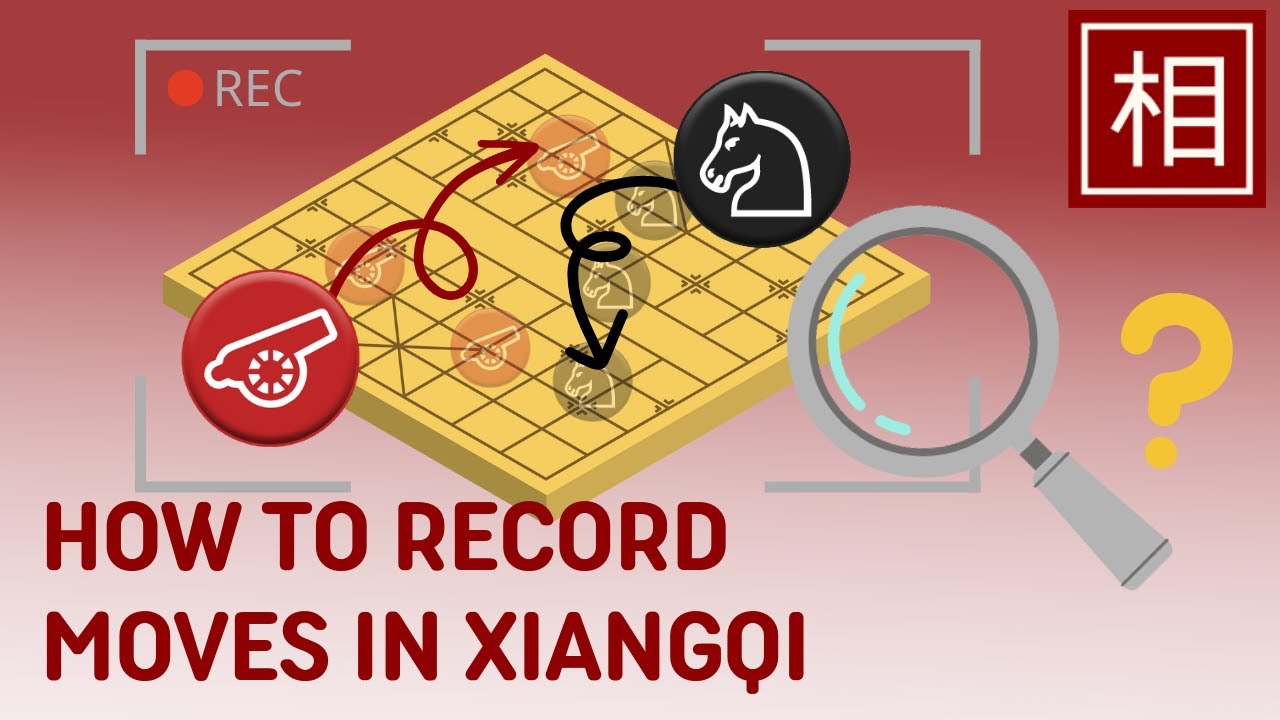
How to Read Xiangqi Notation: A Step-by-Step Beginner’s Guide
Table of Contents
If you want to improve your Chinese Chess skills, you will eventually want to read game books, review famous matches, or study puzzles. To do this, you need to understand the game's language: Xiangqi notation. While Western chess uses an algebraic grid (like e4 or Nf3), Chinese Chess uses a system based on vertical lines and movement directions. Because the two sides (Red and Black) view the board from their own perspectives, reading it can seem tricky at first. Do not worry. Here is how to read xiangqi notation broken down simply, using the standard English algebraic-style system alongside the traditional system.
1. The Anatomy of a Move
In standard Xiangqi notation, every single move is written using exactly four characters. Whether you are reading Western-style letters or Chinese characters, the formula always follows this exact sequence: \(\text{[Which\ Piece]}+\text{[Starting\ File]}+\text{[Direction\ of\ Move]}+\text{[Ending\ File\ or\ Distance]}\) By understanding these four simple components, you can decipher any move on the board.
2. Component 1: The Piece Name
The first symbol tells you which piece is moving. In English text, we use simple one-letter abbreviations:
- K: King (General)
- A: Advisor (Guard)
- E: Elephant
- H: Horse (Knight)
- R: Rook (Chariot)
- C: Cannon
- P: Pawn (Soldier)
(Note: If two identical pieces sit on the same vertical line, a prefix like "+" for the front piece or "-" for the rear piece is added before the letter).
3. Component 2: The Starting File (Lines 1 to 9)
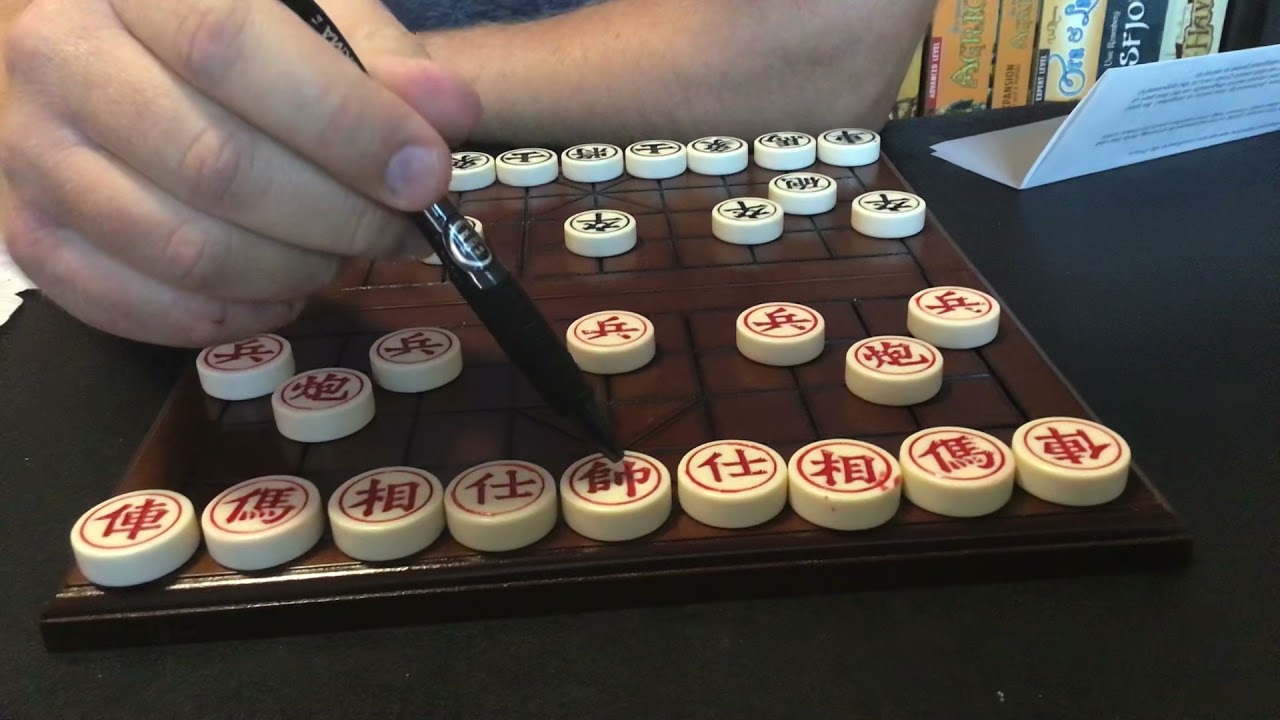
The board consists of 9 vertical lines, called files.
- Files are numbered 1 through 9.
- Count from right to left from the active player's perspective.
- This means Red’s File 1 is on the far right of the Red side. Black’s File 1 is on the far right of the Black side (which is directly opposite Red's File 9).
4. Component 3: The Direction of Movement
The third symbol tells you which way the piece traveled. In English notation, we use three simple symbols:
- + (Advance): The piece moved forward toward the enemy side.
- - (Retreat): The piece moved backward toward its own baseline.
- . (Advance/Horizontal): The piece moved sideways (horizontally). Some systems use = for horizontal moves.
5. Component 4: The Target Destination or Distance
The final number depends entirely on how the piece moves. For Straight-Moving Pieces (Rooks, Cannons, Kings, Pawns)
- If moving sideways: The number represents the destination file it lands on.
- If moving forward or backward: The number represents the exact number of points (distance) the piece traveled.
For Diagonally-Moving Pieces (Horses, Elephants, Advisors)
- Because these pieces always move both vertically and horizontally at the same time, the final number always represents the destination file it lands on.
6. Real Examples: Putting It All Together
Let's look at three common examples to see how this works in a real game:
Example 1: C2+5 (The Central Cannon Opening)
- C: Cannon
- 2: Starts on the 2nd file from the right.
- +: Moves forward.
- 5: Travels a distance of exactly 5 points.
- Result: The Cannon lands perfectly on the central file to threaten the enemy.
Example 2: H8+7 (Developing the Knight)
- H: Horse
- 8: Starts on the 8th file (the left side).
- +: Moves forward.
- 7: Lands on the 7th file.
- Result: The Horse leaps forward and inward toward the center.
Example 3: R1.2 (Moving the Chariot Sideways)
- R: Rook
- 1: Starts on the far-right corner file.
- . (or =): Moves horizontally.
- 2: Lands on the 2nd file.
- Result: The Rook slides one lane over to get out of the corner.
If you want to practice reading actual game scripts, let me know if you would like me to write out a short 5-move sample game transcript or explain how to read the traditional Chinese character version of notation.
Comments (0)
You need to log in to join the discussion.
No comments yet. Be the first to share your thoughts!