Master the Artillery: How to Use the Cannon Effectively in Xiangqi
Table of Contents
- Understanding the Dual Nature of the Cannon
- Essential Opening Strategies with Cannons
- 1. The Power of the Central Cannon (Dang Tou Pao)
- 2. The Palcorner Cannon (Shi Jiao Pao)
- Crucial Tactical Motifs and Combinations
- 1. The Double Cannons (Chong Tian Pao)
- 2. The Iron Bolt (Tie Men Quan)
- 3. The Cannon-Knight Synergy (Ma Pao Quan)
- 4 Rules for Tactical Cannon Placement
- Mastering the Cannon Endgame
- 1. Manufacturing Artificial Screens
- 2. The Power of the Flying King (Flying General)
- 3. Defensive Anchoring
- Conclusion
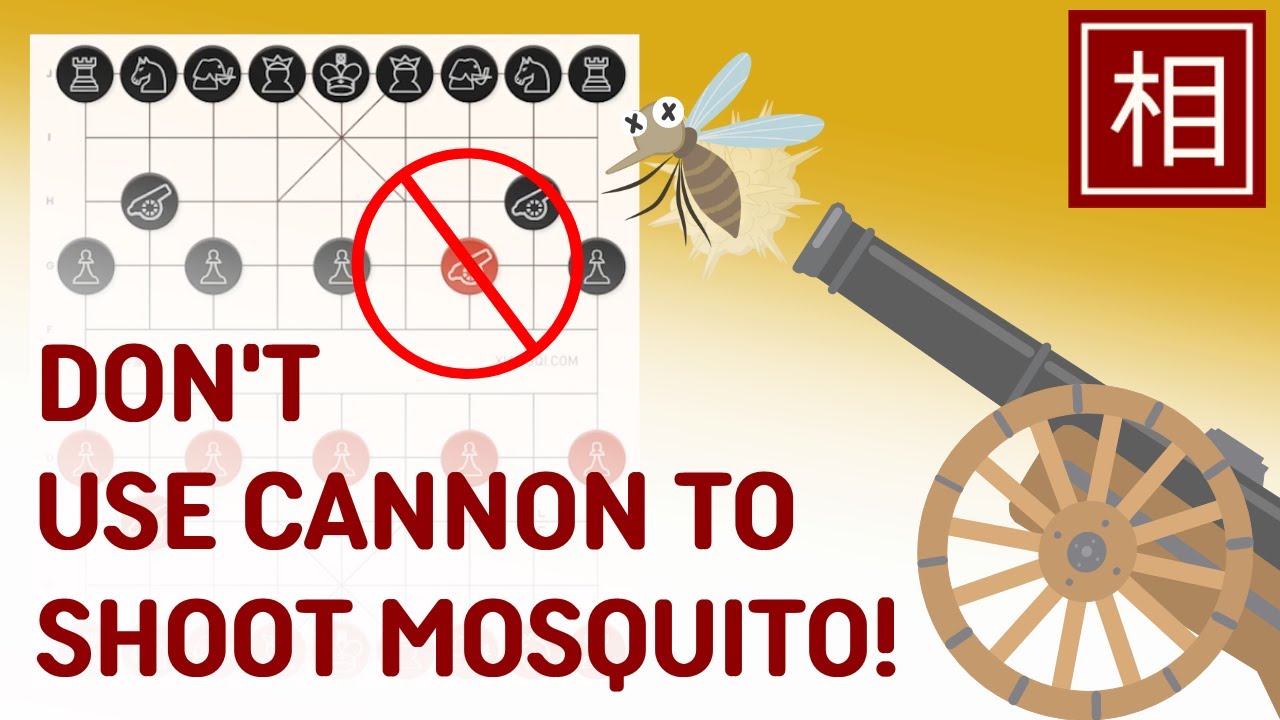
The Cannon (Pao) is arguably the most unique and fascinating piece in Xiangqi (Chinese Chess). Unlike any piece in Western chess, the Cannon moves like a Rook but captures by jumping over exactly one piece, known as the "screen" or "cannon platform." For beginners, the Cannon is a chaotic weapon of surprise. For masters, it is a surgical tool of positional control and tactical restriction. If you want to elevate your game and dominate the board, learning how to use the Cannon effectively in Xiangqi is non-negotiable. This comprehensive guide breaks down the essential strategies, tactical motifs, and endgame principles to help you weaponize your Cannons like a Grandmaster.
Understanding the Dual Nature of the Cannon
To utilize the Cannon effectively, you must understand its core paradox: it thrives on crowds but starves in isolation. Unlike the Chariot (Ju), which grows more powerful as the board clears, the Cannon loses potency as pieces are captured. In the opening and middlegame, the dense cluster of pieces provides endless "screens" for the Cannon to jump over, threaten, and pin enemy forces. In the endgame, a lone Cannon without a platform becomes virtually harmless.
- Early Game: The Cannon is an agile sniper, controlling long files and restricting enemy development.
- Late Game: The Cannon transitions into a defensive anchor or a subtle playmaker, requiring tight coordination with your own Kings, Pawns, or Knights to create artificial screens.
Essential Opening Strategies with Cannons
The very first moves of a Xiangqi match usually revolve around the Cannon. How you position them early sets the tempo for the entire game.
1. The Power of the Central Cannon (Dang Tou Pao)
Moving a Cannon to the central file (e.g., Pao 2 Flat 5) is the most popular opening in Xiangqi for a reason. It immediately holds the enemy central Pawn hostage and takes direct aim at the opponent's palace.
- The Aggressor's Edge: It forces the opponent to respond defensively, usually by deploying a Knight to protect the central Pawn or by countering with a Screen Horse defense.
- Pro Tip: Do not rush to capture the central Pawn immediately unless it grants a concrete positional advantage. The threat of the breakthrough is often more powerful than the capture itself, as it forces the opponent to tie down their pieces in defense.
2. The Palcorner Cannon (Shi Jiao Pao)
Placing your Cannon at the corner of your Advisor's line (the "Palcorner") is an excellent positional alternative. It helps defend your own central flank while preparing to look for open files later. It is a flexible, counter-attacking deployment that avoids early, bloody tactical skirmishes.
Crucial Tactical Motifs and Combinations
To weaponize the Cannon in the middlegame, you must master the classic tactical formations that have defined Xiangqi strategy for centuries.
1. The Double Cannons (Chong Tian Pao)
Line up two Cannons on the same file or rank, pointing directly at the enemy Palace. The front Cannon acts as the screen for the back Cannon.
- Why it works: It creates an incredibly oppressive checkmating threat. If the opponent removes the middle piece, the rear Cannon delivers check. If they block it, the front Cannon can often shift to another target.
2. The Iron Bolt (Tie Men Quan)
This devastating checkmate configuration involves a Chariot locking down the enemy throat rank while a Cannon utilizes a central screen (often an Advisor or an enemy piece) to deliver an inescapable mate from the center file. It is the ultimate punishment for an opponent who fails to develop their defense early.
3. The Cannon-Knight Synergy (Ma Pao Quan)
Cannons and Knights are the perfect tactical duo. While the Knight attacks in short, hopping arcs, the Cannon covers long distances.
- The Tactic: Use your Knight to step into a position that simultaneously attacks an enemy piece and acts as a screen for your Cannon behind it. This creates dual-layered threats that are notoriously difficult for opponents to calculate and escape.
4 Rules for Tactical Cannon Placement
To ensure your Cannons are always operating at maximum efficiency, keep these four tactical rules in mind during the middlegame:
- Maintain Flexible Screens: Never rely on a single, immovable piece as your screen. Use pieces that can move into or out of the line of fire to create "discovered attacks."
- Pin the Enemy Chariots: Look for opportunities to align your Cannon with an enemy Chariot behind an enemy Horse or Elephant. This effectively paralyzes their heavy artillery, forcing them to waste moves untangling their pieces.
- Beware the "Hollow Cannon": If you advance your central Cannon and your opponent successfully drives away the screen, you are left with a "Hollow Cannon." This leaves your own center incredibly vulnerable to counter-attacks.
- Control the Rib Lines: The 4th and 6th files (the rib lines of the palace) are critical. Placing a Cannon on these lines restricts the enemy King's movement and sets up devastating flank attacks.
Mastering the Cannon Endgame
As the board clears, the Cannon's utility changes dramatically. If you do not adapt, your Cannons will become useless dead weight.
1. Manufacturing Artificial Screens
When enemy pieces are gone, you must use your own pieces—specifically your Advisors (Shi), Elephants (Xiang), and Pawns (Bing)—as mobile launchpads. A advanced Pawn paired with a trailing Cannon can march into the enemy palace with terrifying efficiency, using the Pawn as a shifting screen to checkmate the enemy King.
2. The Power of the Flying King (Flying General)
In Xiangqi, the two Kings cannot face each other directly on the same open file; this is the "Flying King" rule. In the endgame, your King can act as a massive, permanent screen for your Cannon. By placing your Cannon on the same file as your King, you can deliver checks across the entire length of the board using the King's reflection of power.
3. Defensive Anchoring
If you find yourself in an endgame at a material disadvantage, use your Cannon defensively. Position it behind your own Elephant or Advisor. From here, it can guard multiple entry points into your palace simultaneously, easily neutralizing incoming enemy Knights and Pawns.
Conclusion
Learning how to use the Cannon effectively in Xiangqi is the bridge between being a casual player and a formidable strategist. It requires a sharp eye for geometry, a deep understanding of piece synergy, and the patience to hold threats rather than rushing into empty captures. By mastering the central opening, practicing combinations like the Iron Bolt, and learning to build artificial screens in the endgame, you will transform your Cannons from unpredictable wildcards into the most feared weapons in your arsenal. Next time you sit down at the board, look at the grid not just as open spaces, but as lines of fire waiting for the perfect screen.
Comments (0)
You need to log in to join the discussion.
No comments yet. Be the first to share your thoughts!