Which is Harder: Xiangqi or Chess? The Ultimate Strategic Showdown
Table of Contents
- 1. Mathematical and Computational Complexity
- 2. Board Layout and Tactical Speed
- The Immediate Violence of Xiangqi
- The Unique Mechanics: Cannon Screens and Blocked Horses
- 3. Positional Play: Pawns vs. Piece Mobility
- Chess: The Permanent Consequences of Pawn Structures
- Xiangqi: Fluid, Dynamic Piece Coordination
- 4. Endgame Technicality and Win Conditions
- The Forgiving Win Conditions of Xiangqi
- The Technical Demands of Chess Endgames
- 5. Learning Curve and Global Theory
- The Verdict: Which is Harder?
For centuries, tactical minds have faced off across gridded battlefields, pushing pieces in an intellectual dance of war. Two of the absolute giants in this realm share a common ancestor but have evolved into vastly different beasts: Western Chess and Xiangqi (frequently called Chinese Chess). If you are a board game enthusiast or a casual player looking to dedicate your time to mastering one, a crucial question inevitably arises: which is harder xiangqi or chess? The short answer is that neither game is objectively harder than the other; rather, they are brutally difficult in entirely different dimensions. While Xiangqi boasts a larger mathematical game-tree complexity, Western Chess demands a deeper understanding of macro-positional play, dynamic pawn structures, and endgame conversions. To settle the debate, this comprehensive guide will break down the mathematical complexity, tactical styles, endgame requirements, and overall learning curve of both legendary games.
1. Mathematical and Computational Complexity
To determine which game is harder from an objective standpoint, we can look at the raw data. Computer scientists evaluate the difficulty of board games using two primary metrics: State-Space Complexity (the number of legal board positions) and Game-Tree Complexity (the number of possible move sequences).
| Complexity Metric | Western Chess | Xiangqi (Chinese Chess) |
|---|---|---|
| Board Grid Size | 8 x 8 (64 squares) | 9 x 10 (90 intersections) |
| Total Pieces | 32 pieces | 32 pieces |
| State-Space Complexity | ~10^46 positions | ~10^48 positions |
| Game-Tree Complexity | ~10^123 sequences | ~10^150 sequences |
| Average Branching Factor | ~35 options per turn | ~38 options per turn |
As shown by data compiled in game-theoretic studies, Xiangqi is mathematically more complex than Western Chess. Because Xiangqi is played on the intersections of a 9x10 grid rather than within the 64 squares of a chess board, it offers more physical space to navigate. Its game-tree complexity beats Western Chess by an astronomical 27 orders of magnitude, making raw, brute-force calculation inherently deeper in the Chinese variant.
2. Board Layout and Tactical Speed
The physical constraints of the board dictate the pacing of the game. For players transitioning between the two, this is often where the initial shock occurs.
The Immediate Violence of Xiangqi
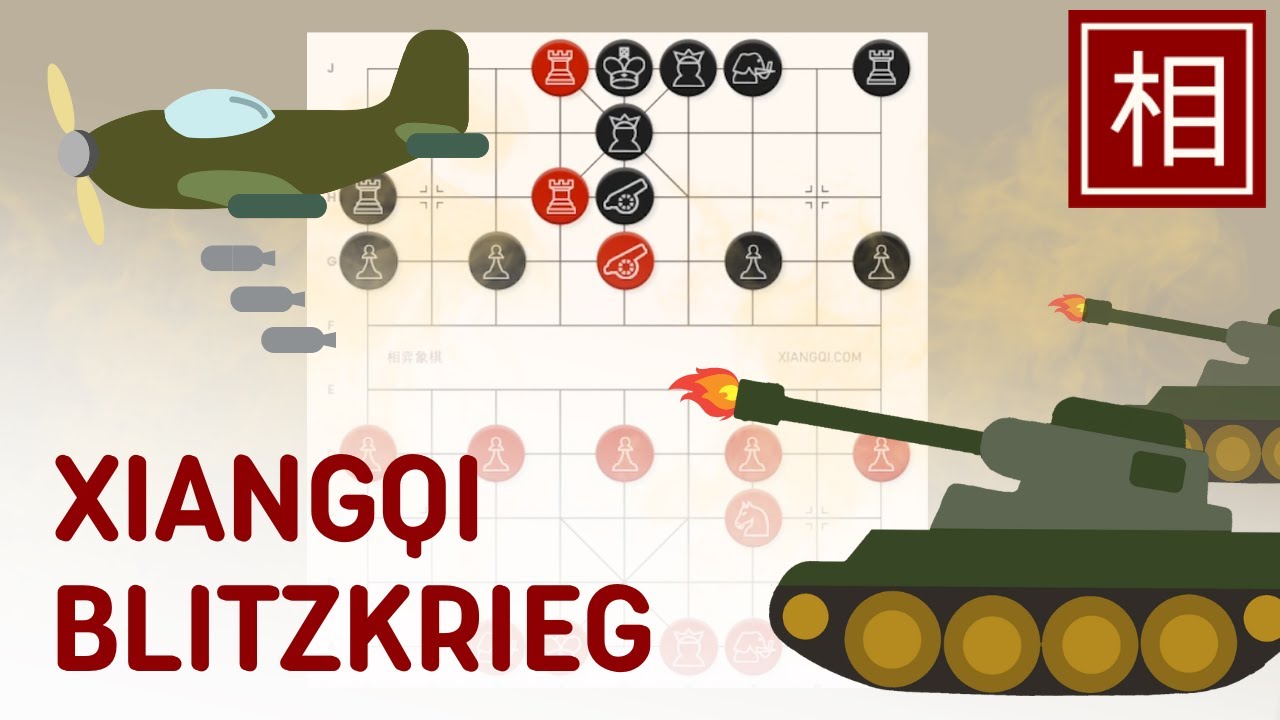
In a standard game of Western Chess, the two armies are separated by a wall of pawns. Developing pieces takes time, and early-game strategy is highly structural. Xiangqi, by contrast, is an immediate firefight. The board features a "River" splitting the middle and a restricted "Palace" on either side that the Generals (Kings) and Advisors can never leave. Furthermore, the pieces start with massive gaps between them. There are only 5 soldiers (pawns) per side, and they are spaced out. This means the mightiest attacking pieces—the Chariots (Rooks) and the explosive Cannons—can cross the river and launch lethal attacks within the first two or three moves.
The Unique Mechanics: Cannon Screens and Blocked Horses
Xiangqi introduces piece limitations that distort standard spatial reasoning.
- The Cannon: To capture an enemy piece, the Cannon must jump over exactly one intervening piece, known as a "screen" or "platform." This introduces complex, layered tactical patterns that have no equivalent in Western Chess.
- The Horse: Unlike the Western Knight, which can freely leap over any piece, the Xiangqi Horse can be physically blocked. If an enemy piece sits on an adjacent intersection along its straight path, the Horse's diagonal jump is restricted.
Because of these rules, the tactical environment in Xiangqi shifts constantly. A square that was safe a moment ago can suddenly become lethal if a screen moves into place for an enemy Cannon.
3. Positional Play: Pawns vs. Piece Mobility
When asking which is harder xiangqi or chess, grandmasters of both games point out that Western Chess is arguably much harder when it comes to long-term structural planning.
Chess: The Permanent Consequences of Pawn Structures
In Western Chess, pawns are the soul of the game. They move slowly, cannot move backward, and their configurations dictate the entire strategic landscape. A weak pawn structure, a backward pawn, or a hole in a square complex can be a permanent disadvantage that dooms a player 40 moves down the line. Furthermore, Chess features Pawn Promotion. A single humble pawn reaching the 8th rank can transform into a dominant Queen, completely swinging the balance of power.
Xiangqi: Fluid, Dynamic Piece Coordination
Xiangqi does not feature a traditional pawn wall. Soldiers only gain the ability to move sideways after crossing the river, and they can never promote into a stronger piece. Instead, positional difficulty in Xiangqi centers entirely around piece mobility and micro-coordination. Because defensive pieces like Elephants and Advisors are confined to their specific halves of the board or the Palace, an attacker must precisely coordinate their active pieces to breach the enemy stronghold. Positional play is fluid and abstract, focused heavily on dynamic attacking potential rather than static pawn chains.
4. Endgame Technicality and Win Conditions
The endgames of these two pastimes present entirely distinct mental hurdles, altering how players convert an advantage into a definitive win.
The Forgiving Win Conditions of Xiangqi
Winning a game of Xiangqi is mechanically more straightforward due to two critical rule differences:
- Stalemate is a Win: In Western Chess, if your opponent has no legal moves but is not in check, the game is a draw (stalemate). This allows for miraculous defensive swindles. In Xiangqi, trapping your opponent so they have no legal moves results in an immediate Stalemate-Win for you.
- The Flying General Rule: The two Generals cannot face each other on the same unobstructed column. This means your General acts as a powerful, invisible laser beam down the file, controlling squares on the opposite side of the board to help deliver checkmate.
The Technical Demands of Chess Endgames
Because stalemate is a draw in Western Chess, converting a minor advantage—such as being up a single pawn—requires flawless, mathematically precise calculation. Chess players must master complex theoretical endgames (like Rook and Pawn vs. Rook) where a single slip-up ruins hours of work. That said, top-level Xiangqi endgames are also profoundly technical. Players must memorize specific winning and drawing matrices (such as how a single Horse can force a win against a single Advisor), making the endgame phase deeply demanding in both disciplines.
5. Learning Curve and Global Theory
Your perception of which game is harder will largely depend on your access to learning materials and the existing ecosystem around the game.
- Western Chess: Chess has a massive, highly accessible global infrastructure. From comprehensive platforms like Chess.com to thousands of books, opening databases, and engine-led tutorials, finding high-quality resources to break down advanced theory is incredibly easy. However, the sheer volume of memorized opening theory required to compete at a high level can feel staggering to newcomers.
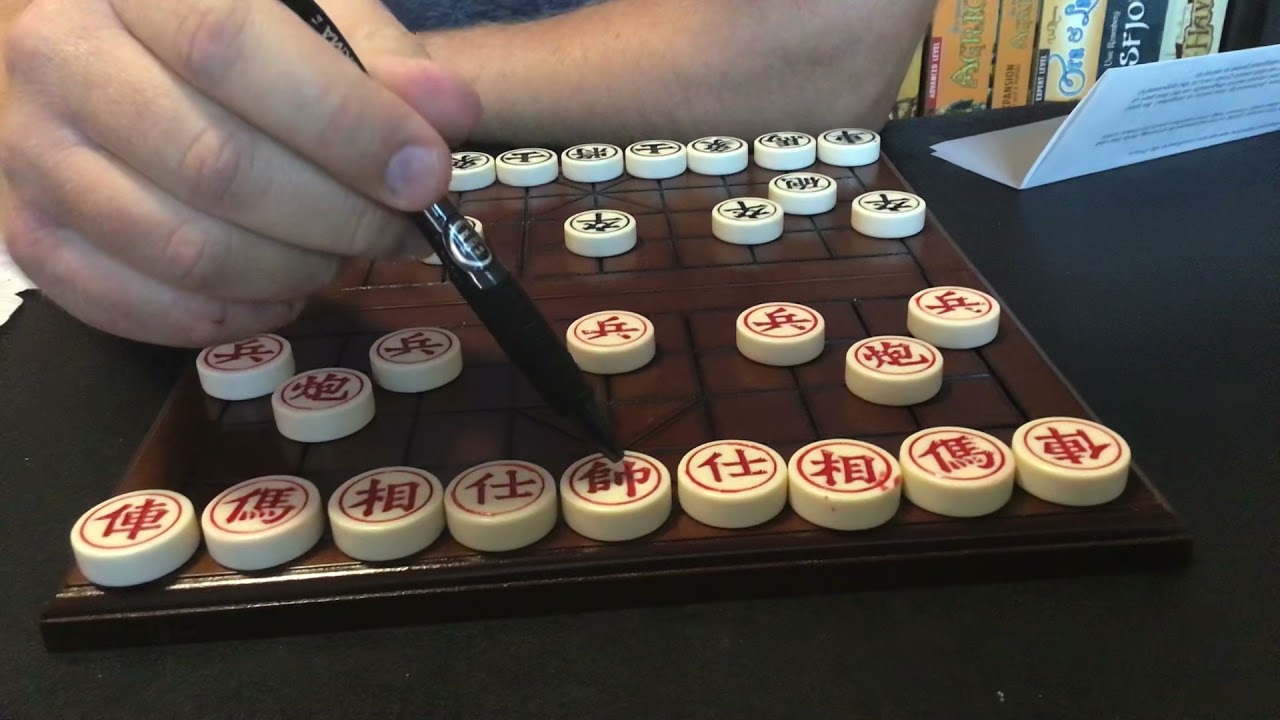
- Xiangqi: For a non-Chinese speaker, the initial learning curve of Xiangqi can feel quite steep. The pieces are traditional circular flat discs marked with Chinese Hanzi characters, which requires some initial visual memorization. Furthermore, while platforms like Xiangqi.com have greatly expanded accessibility, the absolute depth of advanced strategy guides and historical opening databases remains predominantly written in Chinese, presenting a lingering linguistic hurdle for Western players.
The Verdict: Which is Harder?
To summarize the definitive differences between these two elite mind games:
- Choose Western Chess if you find long-term structural planning, grueling positional maneuvering, permanent pawn liabilities, and hyper-precise endgame conversions to be the ultimate test of skill.
- Choose Xiangqi if you prefer deeply complex calculation trees, fast-paced tactical violence, highly dynamic piece interactions, and navigating complex geometric board restrictions.
Ultimately, trying to crown one as definitively "harder" misses the beauty of their unique design. They challenge different lobes of your strategic brain. If you are looking to sharpen your tactical pattern recognition and broaden your board vision, exploring both games will yield massive dividends for your mental acuity.
Comments (0)
You need to log in to join the discussion.
No comments yet. Be the first to share your thoughts!